
Red Chili Powder Safety Inspection
Detect brick powder, sawdust, and Sudan Red dye in chili powder
Inspection Guide
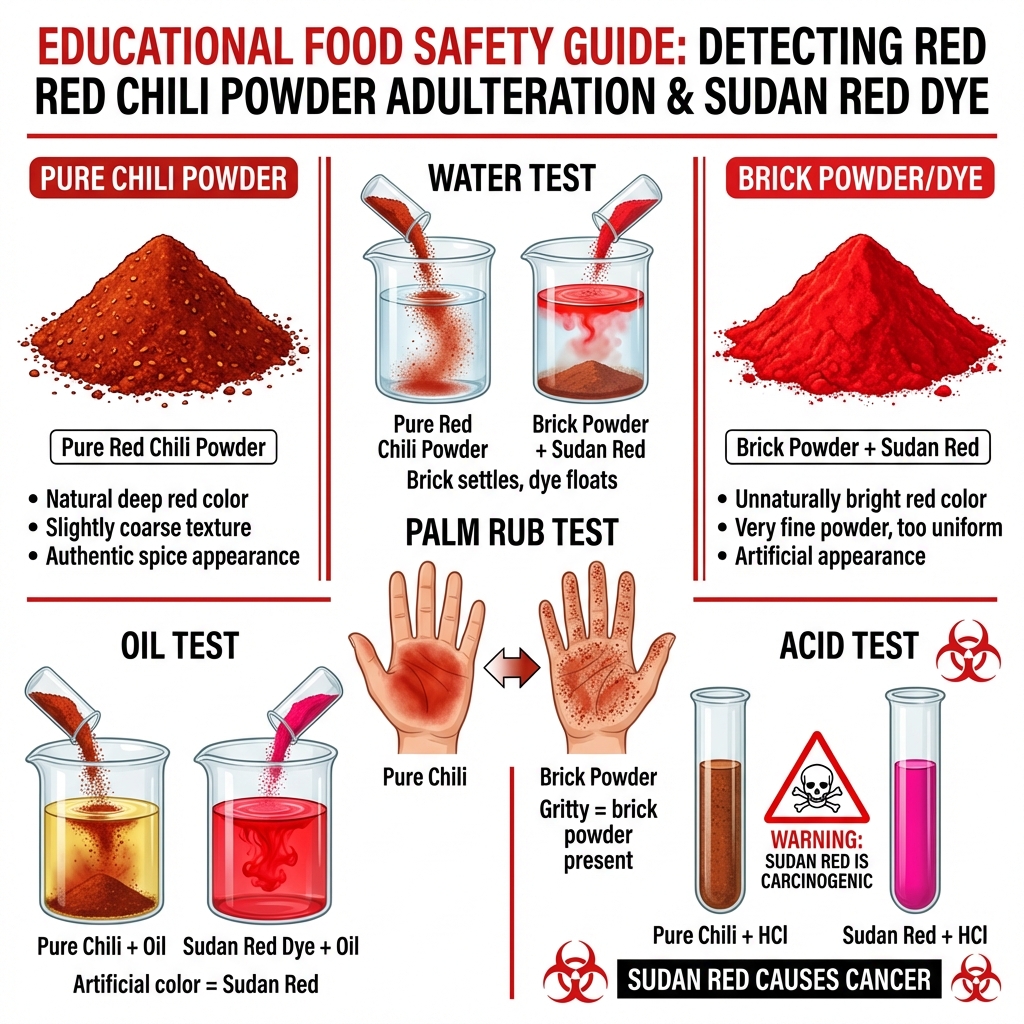
Click to enlarge
Chili Powder Adulteration Detection
Red chili powder is adulterated with brick powder (crushed red bricks), sawdust, and Sudan Red dye (a carcinogenic industrial dye).
1. The Water Float Test:
Fill a glass with water and sprinkle chili powder on top. Pure chili powder will float on the surface initially due to natural oils. Adulterants like brick powder, sawdust, and salt will sink immediately or make the water murky. After 5 minutes, pure chili floats; adulterants settle.
2. The Palm Rub Test:
Put some chili powder on your palm and rub it. Pure chili powder will leave a natural red-orange stain on your palm but won't have a gritty feel. Brick powder or sand will feel rough and gritty, leaving excessive red dust. Your palm will feel scratchy.
3. The Visual Inspection for Particles:
Spread chili powder on a white surface. Examine closely for:
- Brown woody particles (sawdust)
- Brick-red angular particles (crushed brick)
- Uniform bright red (Sudan dye)
- Natural chili has varying shades of red
4. The Color Bleeding Test:
Put chili powder in water and let it settle. Sudan Red dye and synthetic colors will cause excessive color bleeding into water, making it bright red. Natural chili color leaches slowly and the water should be slightly cloudy but not intensely colored.
5. The Burn Test:
Burn a small pinch of chili powder. Pure chili will burn with a characteristic pungent smell. Sawdust will smell like burning wood. Brick powder won't burn easily and will leave gritty residue.
Quick Safety Tips
- Float test - pure chili floats, adulterants sink
- Check for gritty texture (brick powder)
- Avoid unnaturally bright red chili
- Look for brown particles (sawdust)
Chemical Concerns
Step 1: AI Visual Scan
New to BioLens? Try a sample test