
Chayote (Chow Chow) Safety Inspection
Detect internal rot and chemical residues in Chayote
Inspection Guide
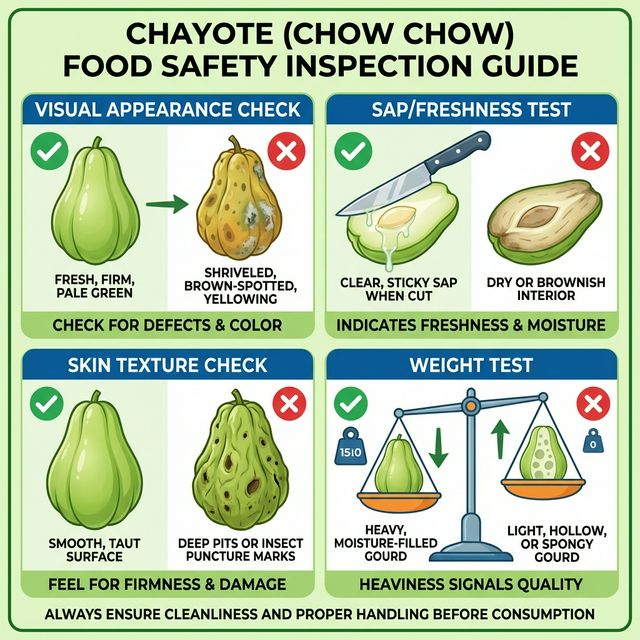
Click to enlarge
Chayote (Chow Chow) Quality Check
Chayote (Chow Chow) is a hard vegetable but can suffer from internal spoilage or high pesticide residues on its deep-ridged skin.
1. The Squeeze Test:
Firmly press the chayote. It should be rock hard. Any soft spots, especially near the base, indicate internal decay and fungal growth.
2. The Skin Ridge Inspection:
Examine the ridges carefully. High pesticide residue can often be found trapped in the tight creases. Check for any white or bluish powdery residue.
3. The Internal Core Check:
Cut the chayote. The flesh should be crisp, white to pale green, and the single large seed should be moist. If the center is brown, black, or mushy, discard it.
4. The Appearance Scan:
Fresh chayote has a bright, light green color. Avoid ones that look shriveled, have deep dark brown pits, or have turned yellowish.
Quick Safety Tips
- Choose hard, vibrant light-green fruits
- Scrub the ridges thoroughly with a brush
- Check for soft spots indicating spoilage
- Internal browning means the fruit is old
Chemical Concerns
Step 1: AI Visual Scan
New to BioLens? Try a sample test