
Cauliflower Safety Inspection
Detect chalk powder and whitening agents in cauliflower
Inspection Guide
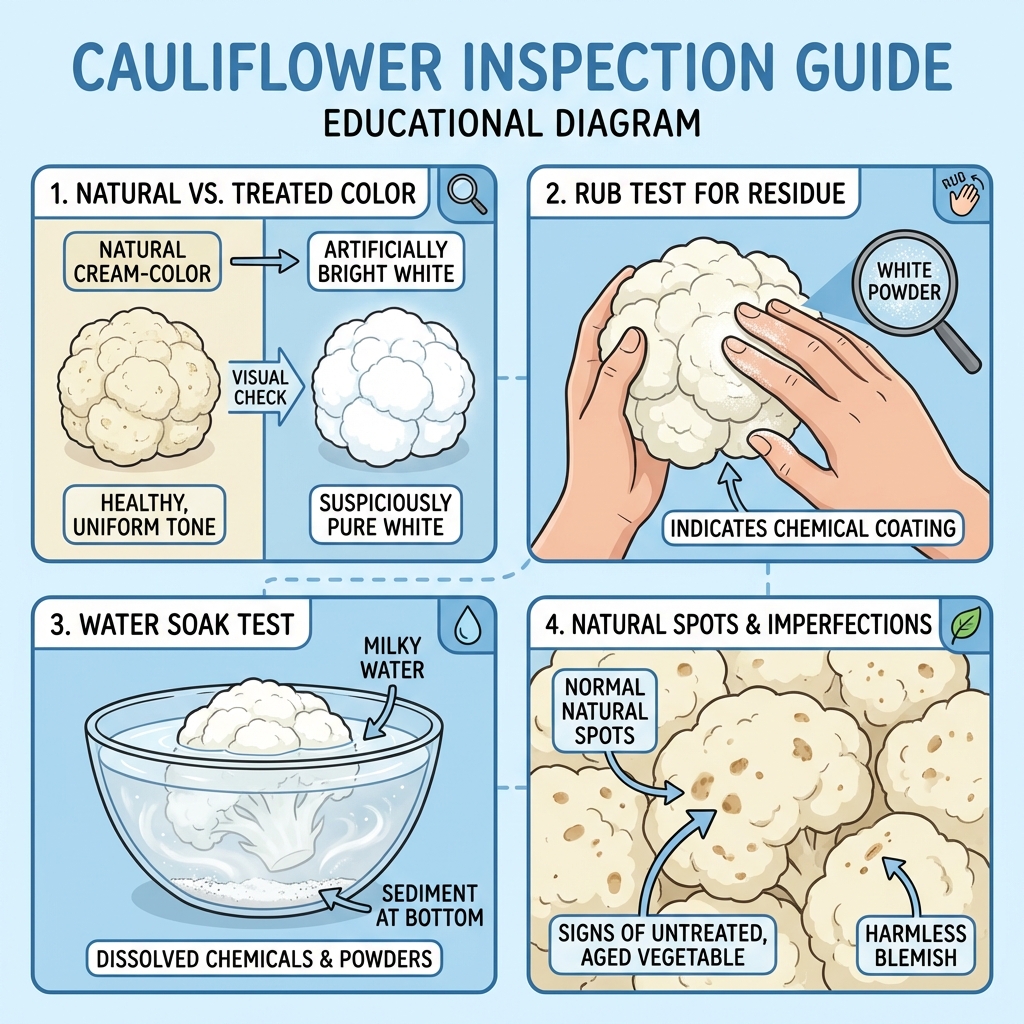
Click to enlarge
Cauliflower Whitening Detection
Cauliflower is frequently treated with chalk powder and other whitening agents to make it appear fresher and whiter than it naturally is.
1. The Color Check:
Natural cauliflower is cream, ivory, or slightly off-white in color. If the cauliflower is bright white (like paper), it has likely been treated with chalk powder or bleaching agents.
2. The Rub Test:
Gently rub the florets with your dry fingers. If white powder comes off easily and coats your hand, it's chalk powder. Natural cauliflower won't leave powdery residue.
3. The Wash Water Test:
Soak the cauliflower in a bowl of water for 15 minutes. If the water turns milky white or you see white sediment settling at the bottom, it indicates chalk powder treatment.
4. The Spot Check:
Look for small brown or black spots on the florets. While these might look unappealing, they are actually signs of natural aging and indicate the cauliflower hasn't been chemically whitened.
Safety Tip:
Always soak cauliflower in warm salted water for 30 minutes before cooking. This helps remove surface chemicals and also flushes out any insects hiding in the florets.
Quick Safety Tips
- Natural cauliflower is cream/ivory, not bright white
- Rub test for powdery residue
- Soak in water and check for milky residue
- Natural spots are good signs
Chemical Concerns
Step 1: AI Visual Scan
New to BioLens? Try a sample test