
Cashew Nuts Safety Inspection
Detect chemical whitening and oil coating in cashews
Inspection Guide
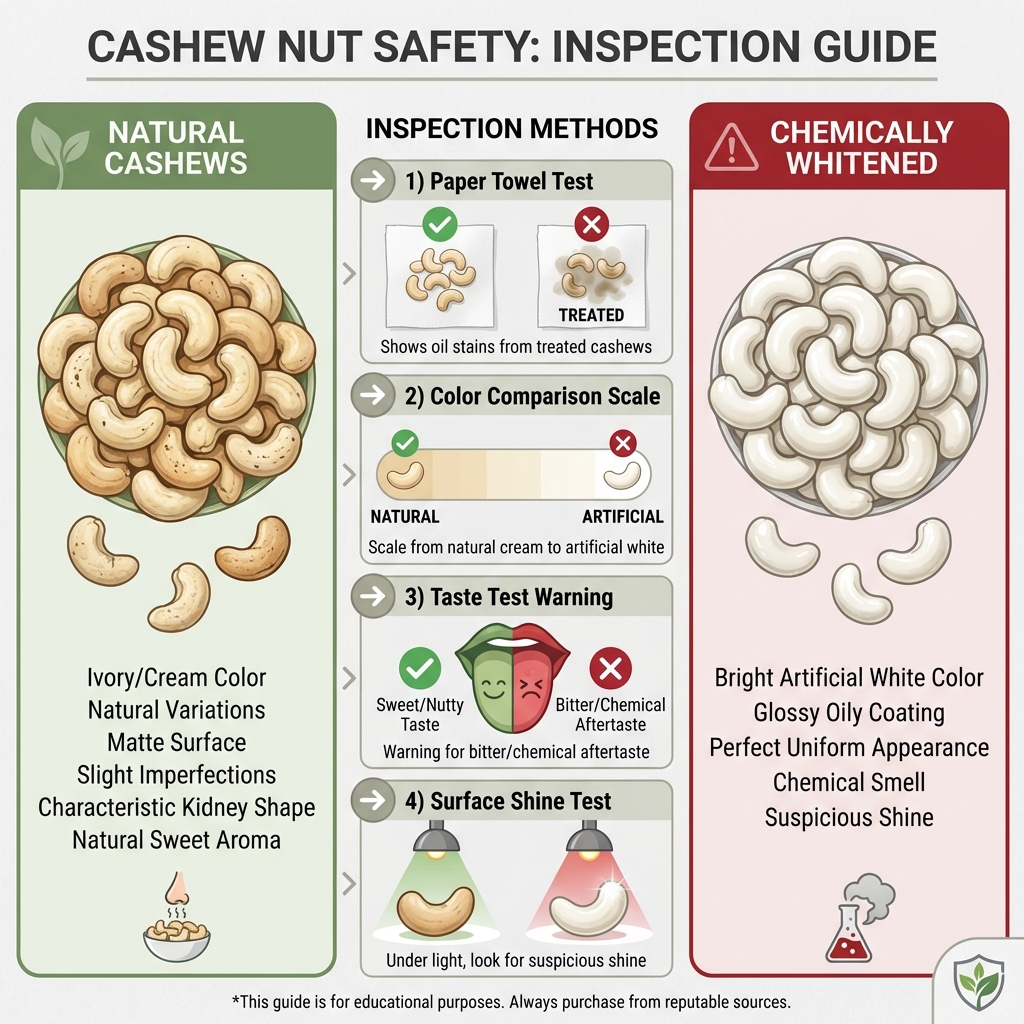
Click to enlarge
Cashew Chemical Whitening Detection
Cashews are bleached with chemicals to appear whiter and oiled excessively for glossy appearance.
1. The Paper Towel Test:
Place cashews on a white paper towel or tissue for 5 minutes. Natural cashews release minimal oil. If you see:
- Large oil stains spreading on paper
- Translucent marks
- Excessive oil absorption
It indicates heavy oil treatment to mask oldness or improve appearance.
2. The Color Comparison Scale:
Natural cashews are ivory/cream colored with natural variations - some lighter, some slightly darker. Chemically whitened cashews are:
- Bright artificial white (like chalk)
- Uniform color across all nuts
- Lack natural cream undertones
Very white cashews = bleached with chemicals.
3. The Taste Test:
Natural cashews have a mild, natural sweet flavor. Chemically treated cashews may taste:
- Bitter or chemical aftertaste
- Metallic flavor
- Rancid if old and oil-coated to hide age
- Lack of natural sweetness
4. The Surface Shine Test:
Hold cashew under light. Natural cashews have a slight natural sheen but mostly matte finish. Chemically treated cashews look:
- Unnaturally glossy and shiny
- Wet appearance from excessive oil
- Mirror-like reflection
5. The Smell Test:
Natural cashews have a mild, pleasant, nutty aroma. Chemical-treated cashews may smell:
- Chemical or like sulfur
- Rancid (if old and oil-coated)
- Lack natural aroma
Quick Safety Tips
- Natural cashews are ivory/cream, not bright white
- Paper towel test for excessive oil
- Check for chemical or sulfur smell
- Taste test for bitter/chemical aftertaste
Chemical Concerns
Step 1: AI Visual Scan
New to BioLens? Try a sample test