
Carrots Safety Inspection
Detect industrial dyes for enhanced orange color in carrots
Inspection Guide
Click to enlarge
Carrot Artificial Coloring Detection
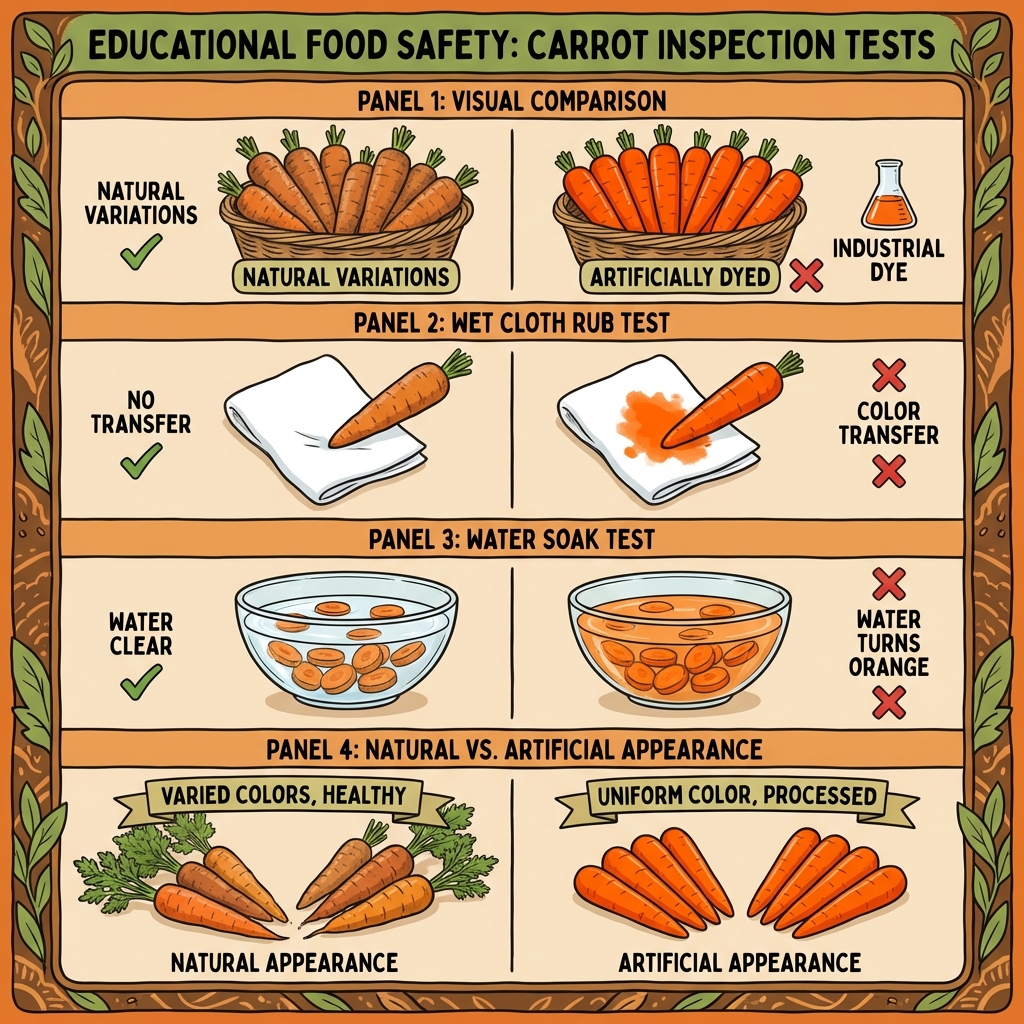
Carrots are treated with industrial dyes to make them appear vibrant orange and hide poor quality or old carrots.
1. The Wet Cloth Rub Test (Primary Test):
Take a wet white cloth or tissue and rub the carrot surface vigorously for 10-15 seconds. If orange color transfers to the cloth, leaving visible stains, it indicates industrial dye treatment. Natural carrots won't leave significant color transfer.
2. The Water Soak Test:
Peel and cut carrots into pieces, then soak in water for 30 minutes. If the water turns orange or has an orange tint, the carrots have been dyed. Natural carrots will release minimal color, keeping water mostly clear.
3. The Color Uniformity Check:
Examine the carrot carefully. Natural carrots have slight color variations - the core might be lighter, the outer layer darker, and there may be natural blemishes. Dyed carrots have abnormally uniform, bright orange color throughout, looking "too perfect."
4. The Peel Test:
Peel the carrot with a vegetable peeler. Natural carrots have the same color inside as outside, maybe slightly lighter. If you notice the outer layer is intensely orange but the inside is pale yellow or white, it's been surface-dyed.
5. The Scrape and Sniff Test:
Scrape the carrot surface with a knife. Natural carrots release a fresh, earthy vegetable smell. Dyed carrots may have a chemical odor or no smell at all.
Quick Safety Tips
- Perform wet cloth rub test for color transfer
- Soak in water - dye will leach into water
- Natural carrots have color variations, not uniform brightness
- Always peel carrots before consumption if suspicious
Chemical Concerns
Step 1: AI Visual Scan
New to BioLens? Try a sample test