
Capsicum (Bell Pepper) Safety Inspection
Detect wax coating and color enhancers in bell peppers
Inspection Guide
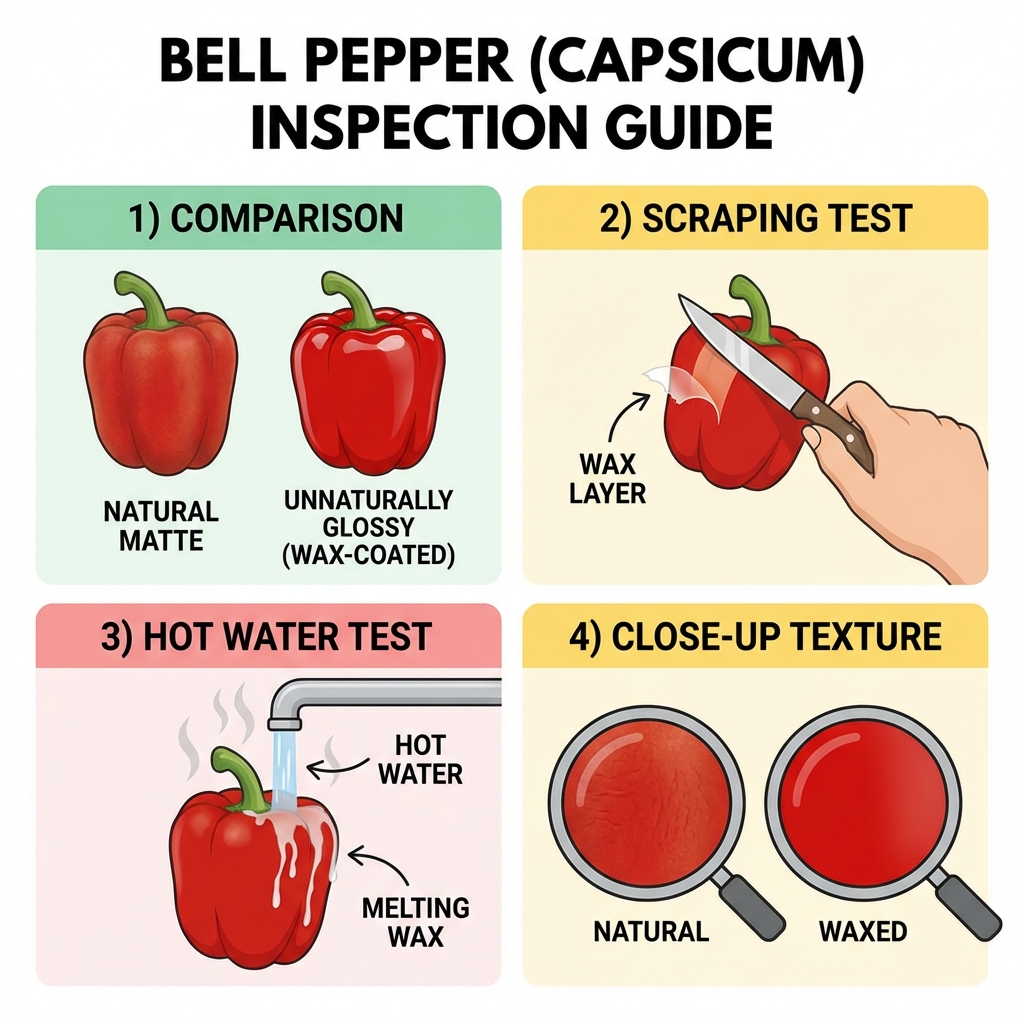
Click to enlarge
Bell Pepper Wax Detection
Capsicum (bell peppers) are often coated with food-grade or industrial wax to maintain a fresh, glossy appearance and extend shelf life.
1. The Visual Shine Test:
Natural bell peppers have a slight natural sheen but are mostly matte. If the pepper looks like it's been polished and has an unnatural glossy shine, it's likely wax-coated.
2. The Scrape Test:
Take a knife and gently scrape the surface of the pepper. If you see a waxy layer coming off (like you'd see on an apple), it indicates wax coating. Natural peppers won't produce this residue.
3. The Hot Water Test:
Run the pepper under hot tap water and rub it. Wax will start to melt and feel slippery or leave residue on your hand. You might also notice white streaks forming.
4. The Wrinkle Check:
Fresh, natural peppers have very slight skin wrinkles or imperfections. Perfectly smooth, shiny peppers with zero wrinkles are suspicious.
Safety Tip:
Wash bell peppers thoroughly with warm water and a vegetable brush. You can also soak them in a mixture of water and baking soda (1 tablespoon per cup) for 15 minutes to help remove wax and pesticides.
Quick Safety Tips
- Check for unnatural glossy shine
- Scrape test for waxy residue
- Hot water melts wax coating
- Wash with baking soda solution
Chemical Concerns
Step 1: AI Visual Scan
New to BioLens? Try a sample test