
Bottle Gourd (Lauki) Safety Inspection
Detect Oxytocin injections, Malachite Green dye, and Bitter Toxicity in Lauki
Inspection Guide
Click to enlarge
Bottle Gourd (Lauki) Safety Audit
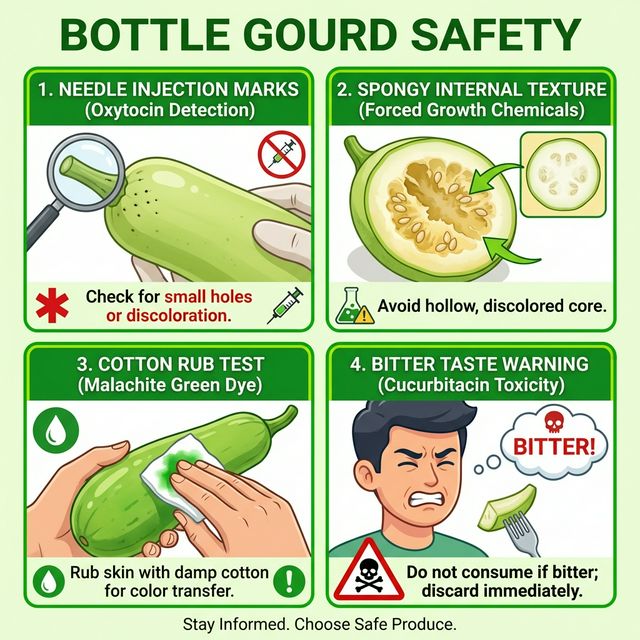
Bottle gourds are high-risk vegetables often treated with growth hormones like Oxytocin or dyed with Malachite Green.
1. The Injection Mark:
Inspect the area near the stem carefully for any tiny pin-prick holes or dark needle marks. These are signs of Oxytocin injections used to make the fruit grow overnight.
2. The Bitter Taste (CRITICAL):
Always taste a tiny raw slice before cooking. If it's bitter, DISCARD IMMEDIATELY. Bitter bottle gourd contains Cucurbitacin, a toxin that can cause severe, sometimes fatal, stomach bleeding.
3. The Cotton Rub Test:
Rub a wet cotton ball on the skin. If it turns green, it's Malachite Green dye used to mask old or pale gourds.
4. The Internal Texture:
Cut the gourd. A naturally grown one is firm and succulent. If the center feels "spongy" or "puffy" while the exterior is large, it indicates forced growth via chemicals.
Quick Safety Tips
- NEVER consume bitter bottle gourd - it is TOXIC
- Check for needle marks near the stem (Oxytocin)
- Use the rub test for Malachite Green dye detection
- Select medium-sized gourds over unnaturally large ones
Multilingual Local Names
Hindiलौकी (Lauki)
Tamilசுரைக்காய் (Suraikkai)
Teluguఆనపకాయ (Anapakaya)
Kannadaಸೋರೆಕಾಯಿ (Sorekayi)
Malayalamചുരയ്ക്ക (Churakka)
Bengaliলাউ (Lau)
Gujaratiદૂધી (Dudhi)
Marathiदुधी भोपळा (Dudhi Bhopla)
FrenchCalebasse
ItalianZucca a fiasco
RussianГорлянка
SpanishCalabaza de botella
GermanFlaschenkürbis
Chinese葫芦
Japaneseユウガオ
Chemical Concerns
Step 1: AI Visual Scan
New to BioLens? Try a sample test