
Black Nightshade (Manathakkali) Safety Inspection
Detect harmful dyes and excessive pesticide spray in Black Nightshade berries
Inspection Guide
Click to enlarge
Black Nightshade Chemical Inspection
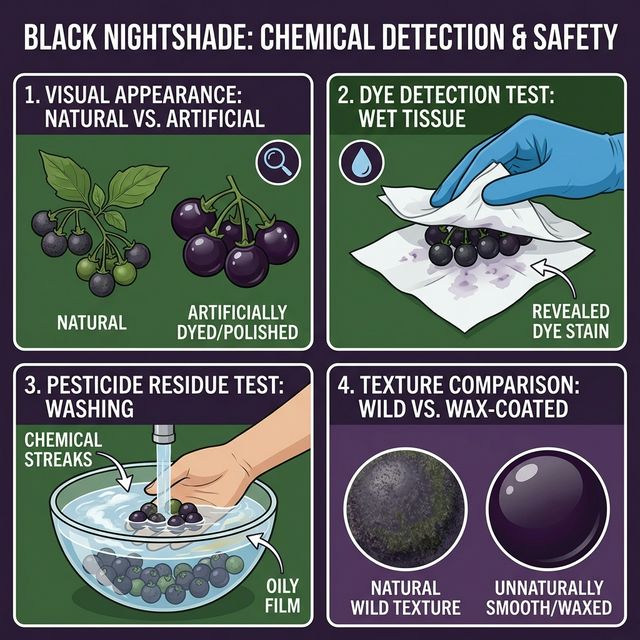
Black nightshade (Manathakkali) berries are prized for health, but can be treated with dyes to look uniform or sprayed with heavy pesticides.
1. The Water Soak Test (Dye Detection):
Soak a handful of ripe berries in warm water for 15 minutes. Pure berries will not color the water. If the water turns purple, blue, or blackish, it indicates the berries have been artificially dyed to look ripe and uniform.
2. The Surface Residue Check:
Examine the leaves and berries for any bluish-white powdery residue. This is often a sign of Copper Sulfate (Bordeaux mixture) spray, used as a fungicide. Excessive residue is toxic.
3. The Rub Test:
Gently rub a few ripe berries with a damp white tissue. Natural berries won't leave color unless crushed. If a purple stain appears on the tissue from just the surface skin, it's dyed.
4. The Ripeness Mix:
Naturally harvested berries come in varying stages (green, turning purple, deep black). If the entire bunch is perfectly uniform deep black with no green/red berries mixed in, suspect artificial ripening agents or dyes.
Quick Safety Tips
- Soak in salt and turmeric water for 30 mins to remove pesticides
- Avoid bunches that are 100% uniform in color
- Check for metallic taste (indicates chemical spray)
- Wash thoroughly to remove any powdery surface residues
Chemical Concerns
Step 1: AI Visual Scan
New to BioLens? Try a sample test