
Beetroot Safety Inspection
Detect artificial color injection and dye treatment in beetroots
Inspection Guide
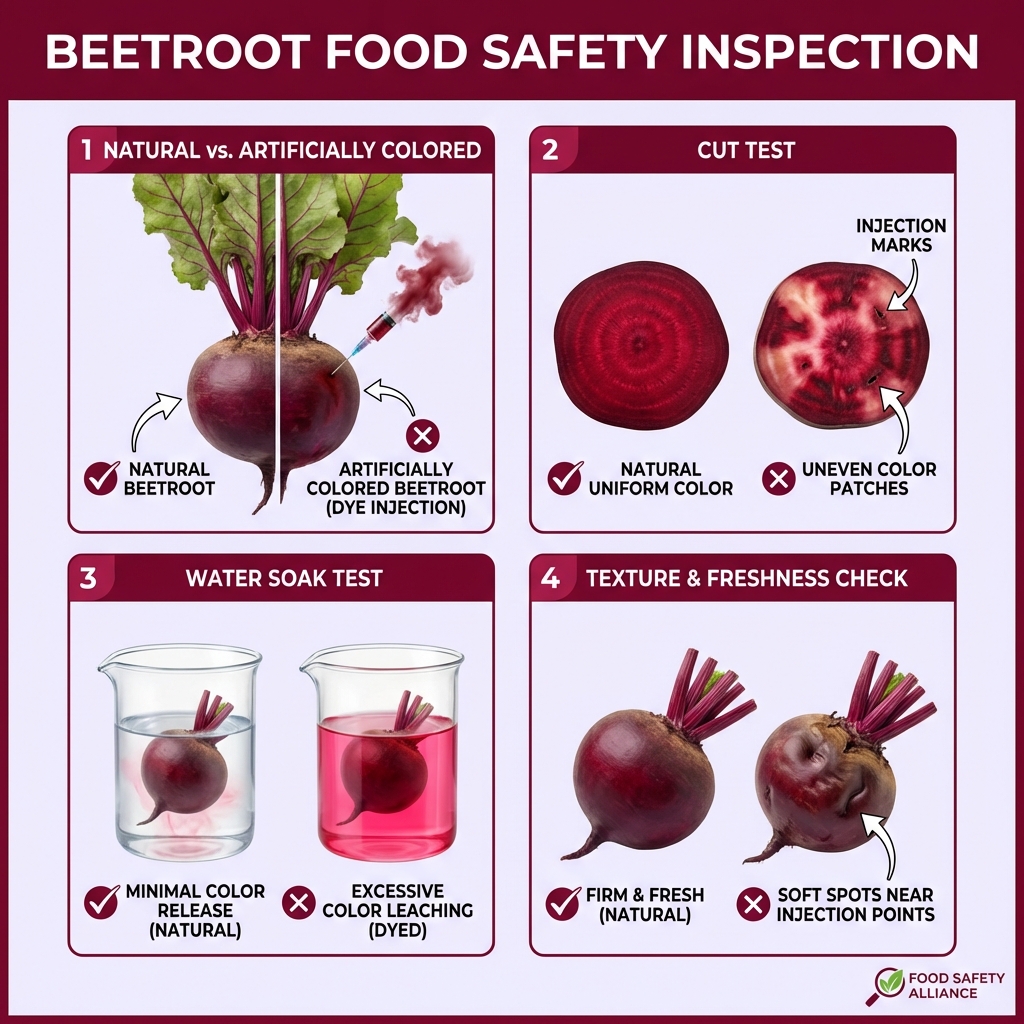
Click to enlarge
Beetroot Color Injection Detection
Beetroots are sometimes injected with artificial food coloring to enhance their red color and hide poor quality or old beetroots.
1. The Cut Test (Most Reliable):
Cut the beetroot in half and examine the interior carefully. Natural beetroot has uniform deep red to purple color throughout. Injected beetroots show uneven color patches, lighter areas, and most importantly, visible injection marks or pin holes on the surface. Look for concentrated red spots radiating from a central point.
2. The Injection Mark Check:
Inspect the beetroot surface closely for small holes or puncture marks. These are needle insertion points for dye injection. Natural beetroots have smooth skin (except for natural root marks). If you see multiple small pin-sized holes, especially near the top, it indicates injection.
3. The Water Soak Test:
Peel and cut beetroot pieces and soak in water for 15-20 minutes. Natural beetroot releases minimal color and the water becomes slightly pink. Dye-injected beetroots cause the water to turn bright pink or red excessively because the artificial dye leaches out easily.
4. The Texture and Firmness Test:
Feel the beetroot. Natural fresh beetroot is firm throughout. Injected beetroots often have soft spots, especially near injection points, because the needle damages the tissue and may introduce bacteria leading to localized rot.
5. The Color Uniformity Test:
Natural beetroot color may vary slightly - some areas darker, some lighter, concentric rings visible. Artificially colored beetroots have unnaturally uniform, bright red color that doesn't match natural variations.
Quick Safety Tips
- Cut and check for injection marks or pin holes
- Look for uneven color patches inside
- Soak in water - excessive color leaching indicates dye
- Check for soft spots near surface punctures
Chemical Concerns
Step 1: AI Visual Scan
New to BioLens? Try a sample test