
Apple Safety Inspection
Detect wax coating and ethylene gas treatment in apples
Inspection Guide
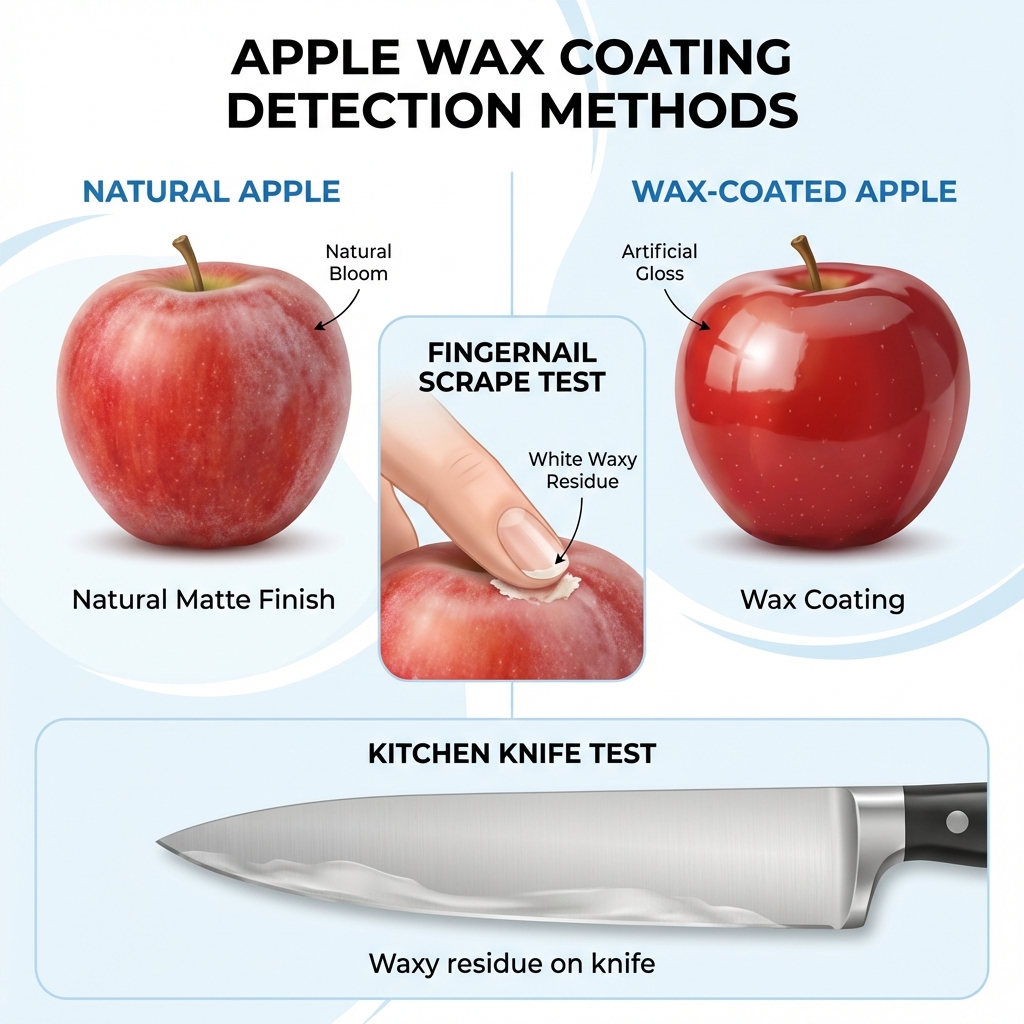
Click to enlarge
Apple Wax Coating Detection
Apples are frequently coated with food-grade wax or industrial wax to maintain a glossy appearance, extend shelf life, and prevent moisture loss. They're also stored in ethylene-controlled chambers.
1. The Shine Test:
Natural apples have a slight natural bloom (dull, matte finish). If the apple looks unnaturally shiny and glossy like it's been polished, it's wax-coated. The difference is significant - it looks like a showroom apple.
2. The Scrape Test:
Use your fingernail or a knife to gently scrape the apple skin. If you see a waxy residue coming off (white film) or the surface feels sticky afterward, it's wax-coated. Natural apples won't produce this residue.
3. The Knife Test:
Cut the apple with a knife. Wax-coated apples will leave a visible waxy residue on the knife blade. Wipe the blade with tissue - you'll see the wax transfer.
4. The Hot Water Test:
Pour hot (not boiling) water over the apple. Wax coating will start to melt and appear as white streaks or a white film on the surface. The apple will feel slippery.
5. The Aroma Test:
Natural apples have a fresh, fruity aroma. Wax-coated apples often have little to no smell because the wax seals in the aroma.
Quick Safety Tips
- Check for unnatural glossy shine
- Perform scrape test with fingernail
- Always peel wax-coated apples before eating
- Wash with warm water and baking soda solution (1 tbsp per cup) for 15 minutes
Chemical Concerns
Step 1: AI Visual Scan
New to BioLens? Try a sample test