
Almonds Safety Inspection
Detect chemical coating, bleaching, and fake almonds
Inspection Guide
Click to enlarge
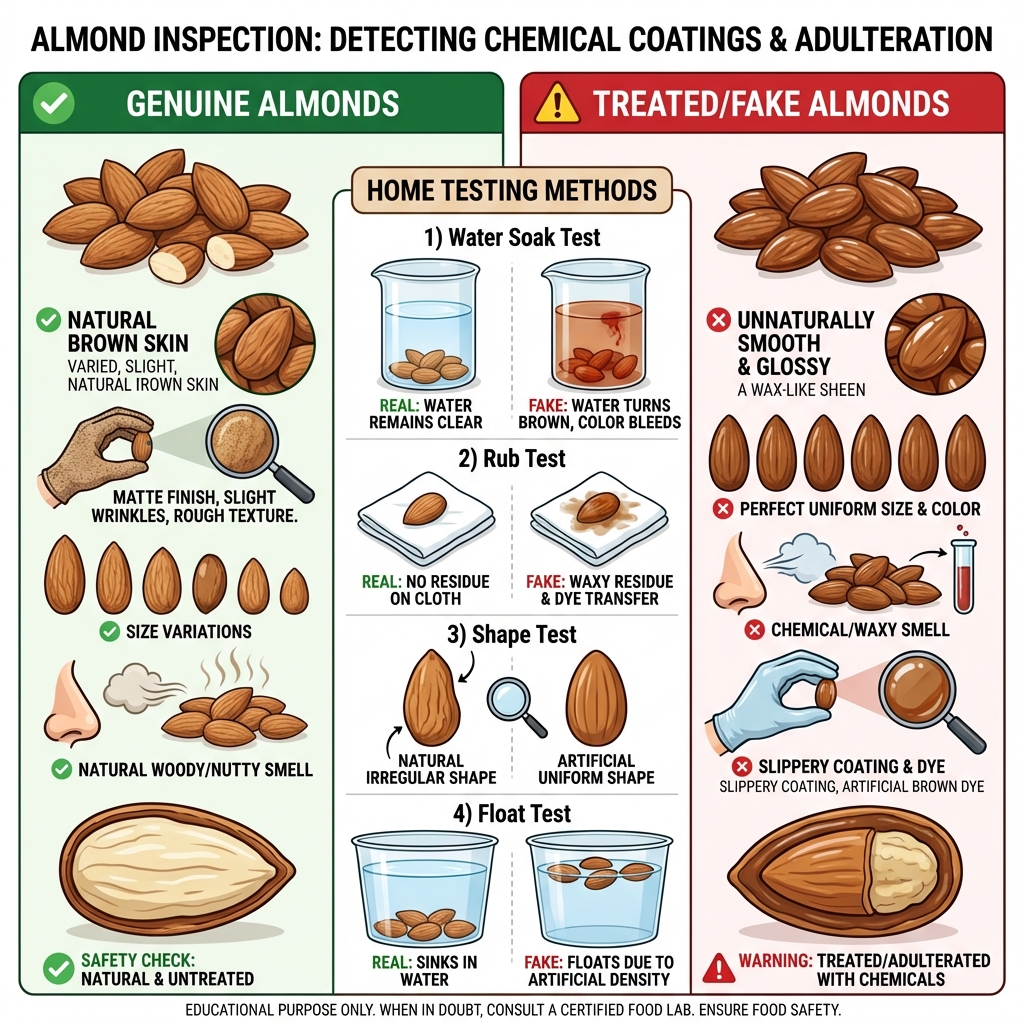
Almond Inspection - Detect Coating & Adulteration
Almonds are treated with chemicals for appearance enhancement and mixed with fake almonds to increase profits.
1. The Water Soak Test:
Soak almonds in water for 3-4 hours. Genuine natural almonds will slightly swell and the brown skin will wrinkle but remain intact. If the water turns brown/muddy with color bleeding, it indicates artificial brown dye. Real almonds release minimal color.
2. The Rub Test (Dry & Wet):
Dry test: Rub almond skin with dry tissue. Minimal residue = natural.
Wet test: Rub with wet white cloth. If brown color transfers heavily or you feel waxy residue, it's treated with dye or coating.
3. The Shape & Size Test:
Natural almonds have slight size variations and natural irregular oval shapes. If all almonds are perfectly uniform in size and shape, suspect adulteration or artificial processing. Fake almonds made from cheaper materials have unnaturally perfect shapes.
4. The Float Test:
Put almonds in water. All genuine almonds should sink due to their density. If some float (hollow inside), they may be:
- Old/rancid almonds
- Fake almonds made with fillers
- Treated with excessive oil
5. The Surface Texture Check:
Natural almond skin has a matte finish with slight wrinkles and rough texture. Treated almonds have:
- Unnaturally smooth, glossy surface
- Slippery feeling from chemical coating
- Perfect appearance without natural wrinkles
Quick Safety Tips
- Water soak test - color bleeding indicates dye
- Natural almonds have rough matte texture
- Check for size variations (natural characteristic)
- Wash thoroughly before consumption
Chemical Concerns
Step 1: AI Visual Scan
New to BioLens? Try a sample test