
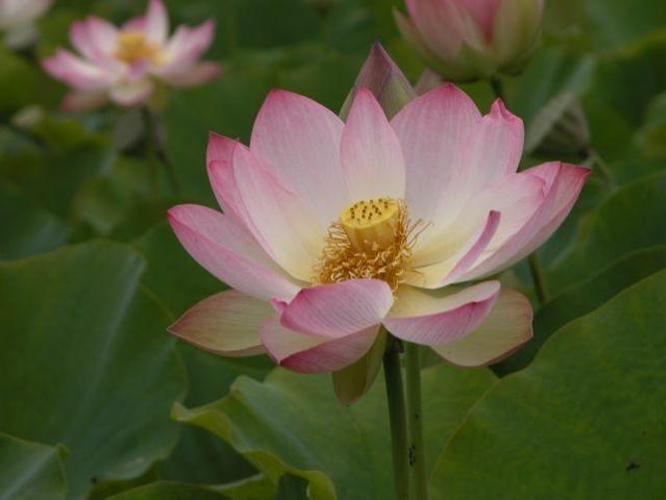
Lotus
Nelumbo nucifera
Basic Details
Floral Formula & Features
Ebracteate (no bracts), radially symmetrical (actinomorphic), bisexual, 4-5 free sepals (caducous, falling early), 15-25 free petals in multiple whorls, numerous free stamens (100-200+), 8-30 free carpels embedded separately in flat-topped receptacle (apocarpous), each with superior ovary. Unique floral structure
- Name 'Lotus' from Greek 'lotos.' Sacred in Buddhism and Hinduism, symbolizing purity rising from muddy water. National flower of India and Vietnam. Fossil records show lotus existed 135 million years ago. Seeds can remain viable for centuries - one germinated after 1,300 years
- Flowers 4-12 inches (10-30 cm) across with 15-25 petals arranged in multiple layers around prominent yellow seed pod. Colors include pink, white, red, yellow, and bicolors. Sweet fragrance strongest in morning. Blooms rise 1-6 feet above water on sturdy stalks. Each flower lasts 3-4 days, opening at dawn, closing at dusk. Blooms summer (June-September)
- Aquatic perennial growing from thick rhizomes buried in mud. Leaves emerge on separate stalks - some float on water, others rise 1-6 feet above surface. Leaves circular, 12-36 inches across, with waxy coating that repels water. Dies back in winter, regrows from rhizomes in spring. Flowers generate heat (up to 95°F) to attract pollinators
- Leaves and flowers rise 3-6 feet (1-2 m) above water surface, occasionally to 8 feet. Rhizomes spread 3-6 feet. Lifespan of 30-50+ years, some specimens over 100 years. Propagated from rhizome division, seeds (scarify hard seed coat), or tubers. Requires water depth 2-6 feet
- Native to tropical and subtropical Asia from India to China, Southeast Asia, and northern Australia. Grows wild in slow-moving rivers, ponds, and lakes. Now cultivated worldwide in warm climates. Introduced to Egypt in ancient times. Thrives in muddy, nutrient-rich water
- Requires full sun (6-8 hours daily) for flowering. Grows in still or slow-moving water 6 inches to 6 feet deep. Needs muddy bottom rich in organic matter. Tolerates wide temperature range but frost kills foliage. Hardy zones 4-11 (rhizomes survive freezing if below ice). Water temperature 75-87°F ideal for growth
- Seeds (lotus nuts) eaten fresh, dried, or candied - high in protein. Young rhizomes (lotus root) sliced and cooked in stir-fries, soups. Leaves wrap food for steaming. Flowers used in tea, religious ceremonies. Stamens make expensive tea. All parts used in traditional medicine for various ailments
- Central to Buddhist and Hindu symbolism - represents spiritual awakening and purity. Offered in temples across Asia. Leaves demonstrate 'lotus effect' studied for self-cleaning materials. Attracts bees and beetles. Provides habitat for fish and frogs. Symbolizes beauty, grace, prosperity, and fertility in Asian cultures
Names in Different Languages
What is Floral Formula?
A floral formula is a symbolic representation of a flower's structure using letters, numbers, and special symbols. It provides a concise way to describe the arrangement and number of floral parts.
This formula describes the flower's symmetry, sepals, petals, stamens, and carpels in a standardized format.
Formula Sequence
- Bract: Br or Ebr
- Bracteole: Brl or Ebrl
- Symmetry: % (Radial) or ⊕ (Bilateral)
- Sex: ♀ (Female), ♂ (Male), or ⚥ (Bisexual)
- Calyx/Sepal: K<number> (Free or Fused)
- Corolla/Petal: C<number> (Free or Fused)
- Androecium: A<number> (Free or Fused)
- Gynaecium: G<number> (Superior or Inferior Ovary)
Symbol Meanings
- Numbers: Indicate quantity of parts
- Parentheses (): Parts are fused together
- Plus (+): Parts in different whorls
- Underline: Superior ovary position
- Overline: Inferior ovary position
- ∞: Numerous parts (too many to count)
Understanding floral formulas helps botanists quickly identify and classify flowers based on their structural characteristics.
Similar Flowers
Discover flowers that share botanical characteristics
Similar Characteristics
4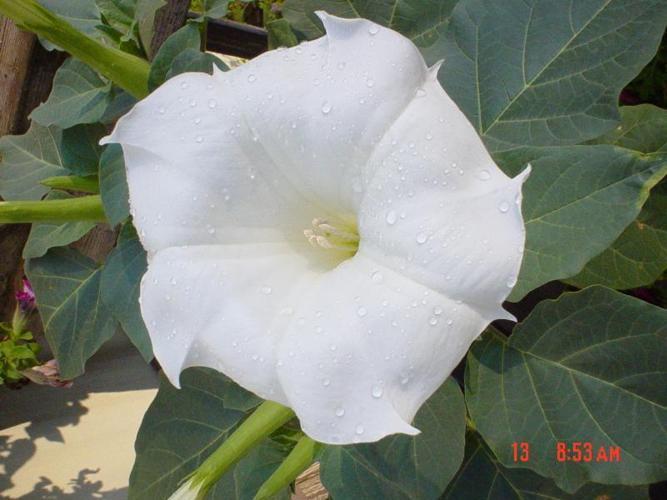
Thorn Apple
Datura stramonium
Striking annual herb featuring large, trumpet-shaped flowers that bloom white or...
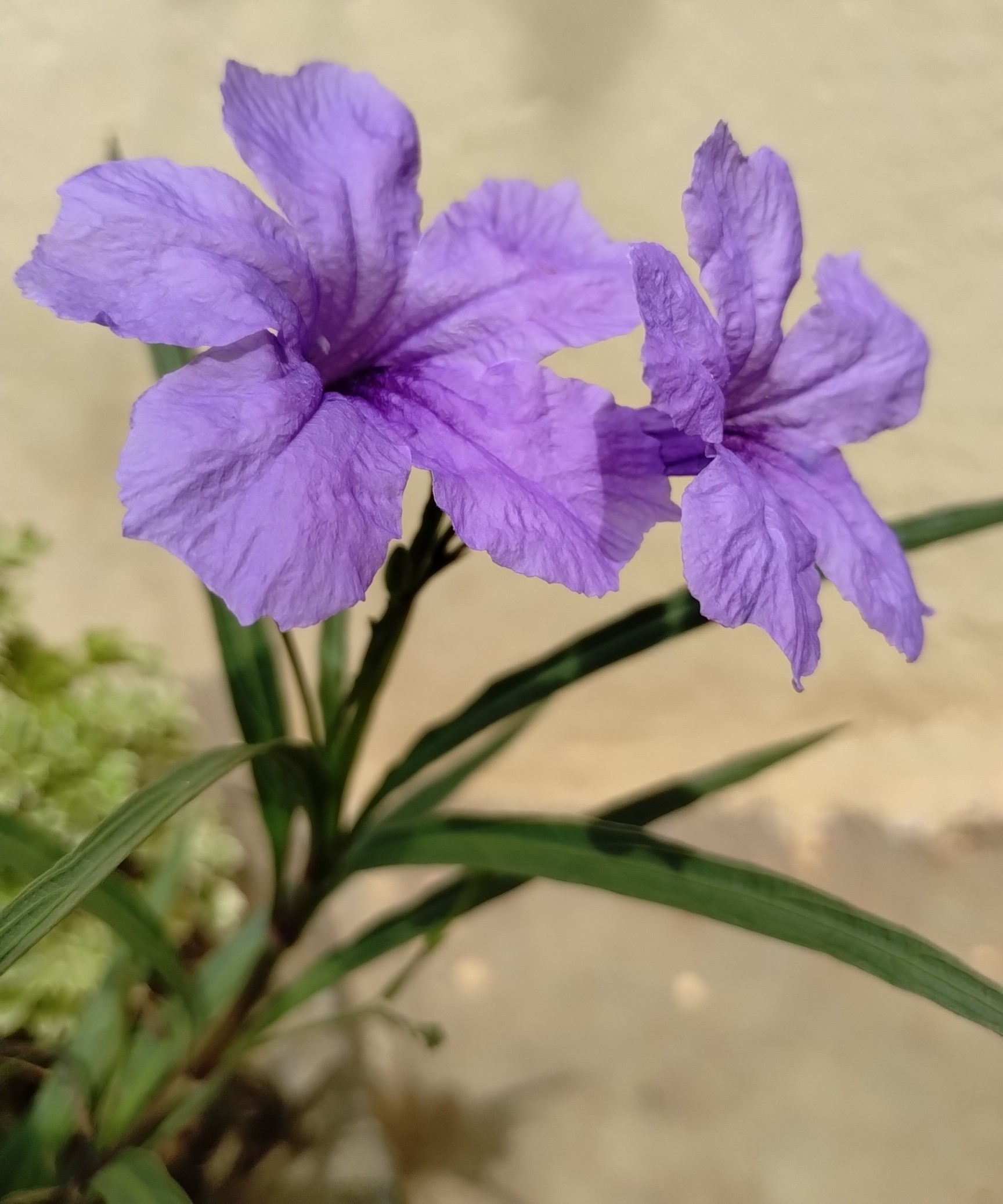
Mexican Petunia
Ruellia simplex
Vigorous perennial producing trumpet-shaped flowers resembling petunias in shade...
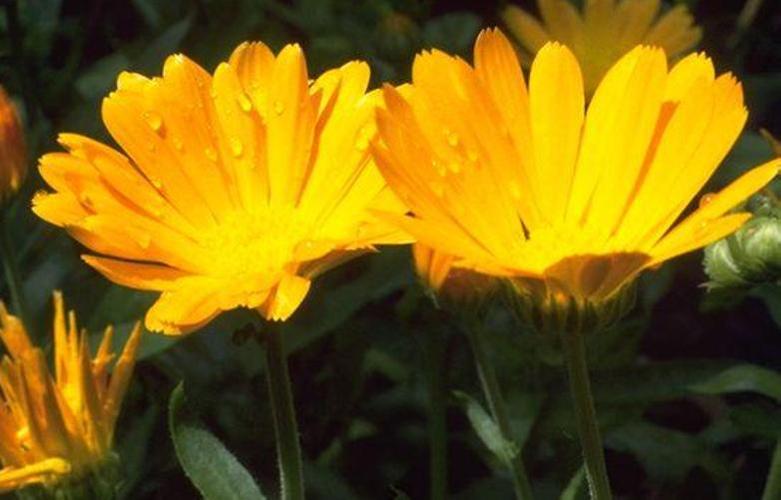
English Marigolds
Calendula officinalis
Cheerful annual featuring bright orange or yellow daisy-like flowers with a dist...
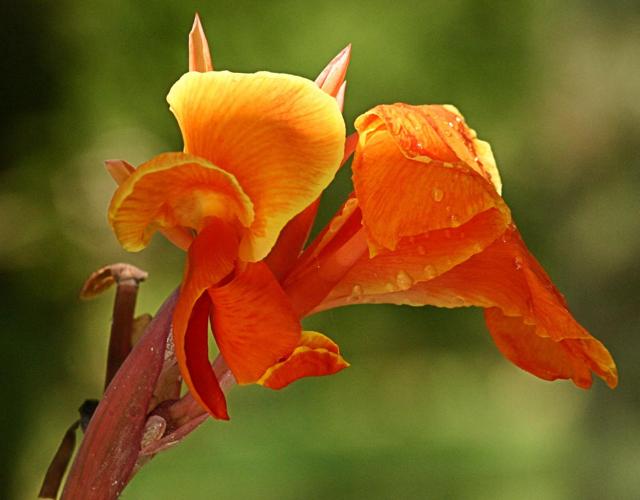
Canna lily
Canna indica
Bold tropical perennial featuring large, paddle-shaped leaves reminiscent of ban...