
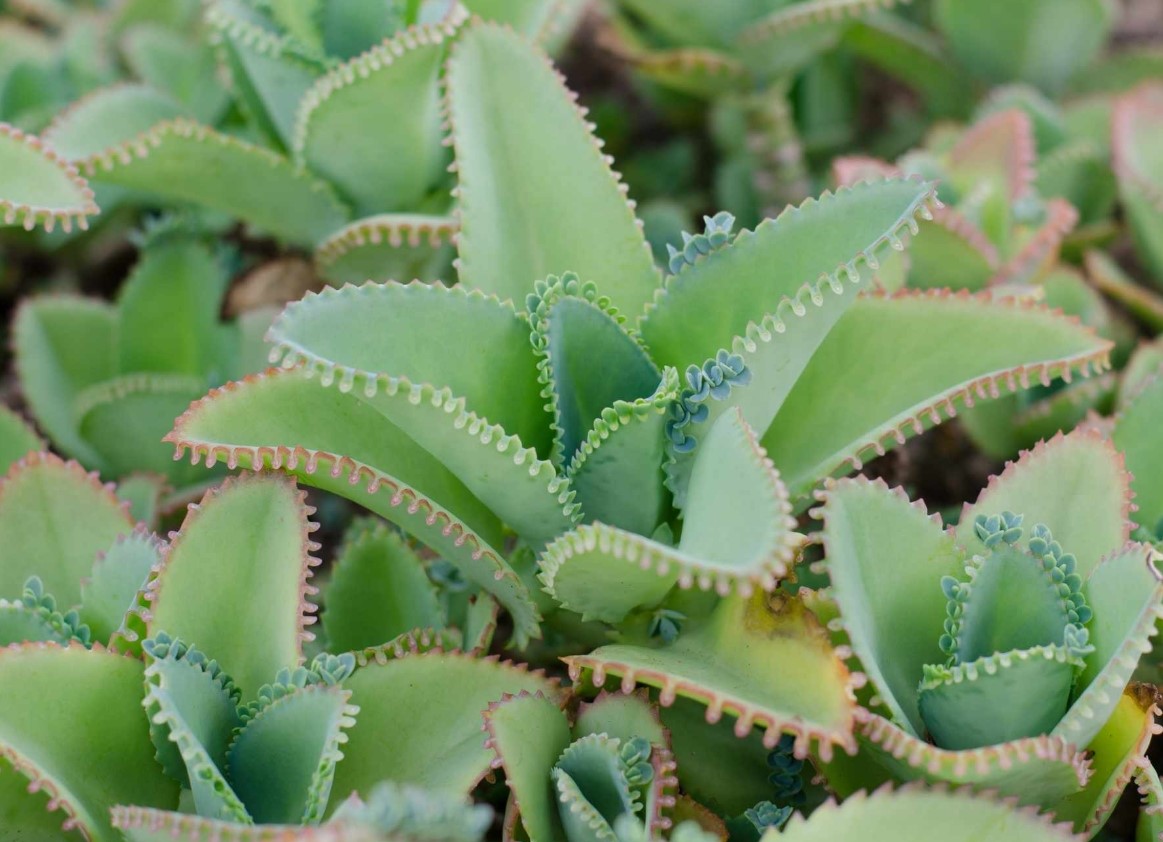
Kalanchoe
Kalanchoe
Basic Details
Floral Formula & Features
Ebracteate (no bracts), Actinomorphic (radially symmetrical), bisexual, 4 fused sepals, 4 fused petals forming tube, 8 stamens in 2 whorls of 4, 4 free carpels with superior ovaries typical of Crassulaceae
- Name 'Kalanchoe' from Chinese 'Kalan Chauhuy' meaning 'that which falls and grows' (plantlets drop and root). About 125 species. Member of Crassulaceae (stonecrop family). K. blossfeldiana most popular houseplant. K. pinnata (Mother of Thousands) used medicinally. K. tomentosa (Panda Plant) has fuzzy leaves
- Small tubular or bell-shaped flowers 0.25-0.5 inch (0.6-1.5 cm) long in dense clusters. 4 petals, 4 sepals. Colors include red, pink, orange, yellow, white. K. blossfeldiana blooms winter-spring, lasts 6-8 weeks. Some species have pendulous flowers. Long-lasting cut flowers
- Succulent perennial with thick, fleshy leaves storing water. Leaves vary by species - oval, scalloped, paddle-shaped, fuzzy. Growth habit ranges from compact 6 inches (15 cm) to tall 6 feet (2 m). Some produce plantlets on leaf margins (K. daigremontiana, K. pinnata)
- Size varies by species: K. blossfeldiana 6-12 inches (15-30 cm), K. beharensis 3-6 feet (1-2 m), K. thyrsiflora 12-18 inches (30-45 cm). Lifespan 3-7 years as houseplant, longer outdoors. Propagated by stem cuttings, leaf cuttings, offsets, or plantlets. Easy to propagate
- Native to Madagascar (majority of species), tropical Africa, Asia. K. blossfeldiana from Madagascar. K. pinnata from Madagascar, now pantropical. Found in arid, semi-arid regions. Adapted to dry conditions. Widely cultivated worldwide as houseplants, ornamentals
- Requires bright, indirect light (some direct sun okay). Thrives in well-draining cactus/succulent soil. Water when soil dry - drought-tolerant, susceptible to overwatering/root rot. Prefers 60-85°F (15-30°C). Hardy zones 10-12 outdoors. Low humidity. Minimal fertilizer needed
- K. pinnata used in traditional medicine for wounds, burns, infections, inflammation, diabetes, respiratory issues. Contains flavonoids, bufadienolides. Anti-inflammatory, antimicrobial, antioxidant properties. Toxic to cats, dogs (cardiac glycosides) - keep away from pets. Not for human consumption without guidance
- Deadhead spent flowers to encourage reblooming. Prune leggy growth. Repot every 2-3 years. Reduce watering in winter. Provide short days (14 hours darkness) for 6 weeks to induce blooming in K. blossfeldiana. Watch for mealybugs, aphids. Extremely easy care, perfect for beginners
Names in Different Languages
What is Floral Formula?
A floral formula is a symbolic representation of a flower's structure using letters, numbers, and special symbols. It provides a concise way to describe the arrangement and number of floral parts.
This formula describes the flower's symmetry, sepals, petals, stamens, and carpels in a standardized format.
Formula Sequence
- Bract: Br or Ebr
- Bracteole: Brl or Ebrl
- Symmetry: % (Radial) or ⊕ (Bilateral)
- Sex: ♀ (Female), ♂ (Male), or ⚥ (Bisexual)
- Calyx/Sepal: K<number> (Free or Fused)
- Corolla/Petal: C<number> (Free or Fused)
- Androecium: A<number> (Free or Fused)
- Gynaecium: G<number> (Superior or Inferior Ovary)
Symbol Meanings
- Numbers: Indicate quantity of parts
- Parentheses (): Parts are fused together
- Plus (+): Parts in different whorls
- Underline: Superior ovary position
- Overline: Inferior ovary position
- ∞: Numerous parts (too many to count)
Understanding floral formulas helps botanists quickly identify and classify flowers based on their structural characteristics.
Similar Flowers
Discover flowers that share botanical characteristics
Similar Characteristics
4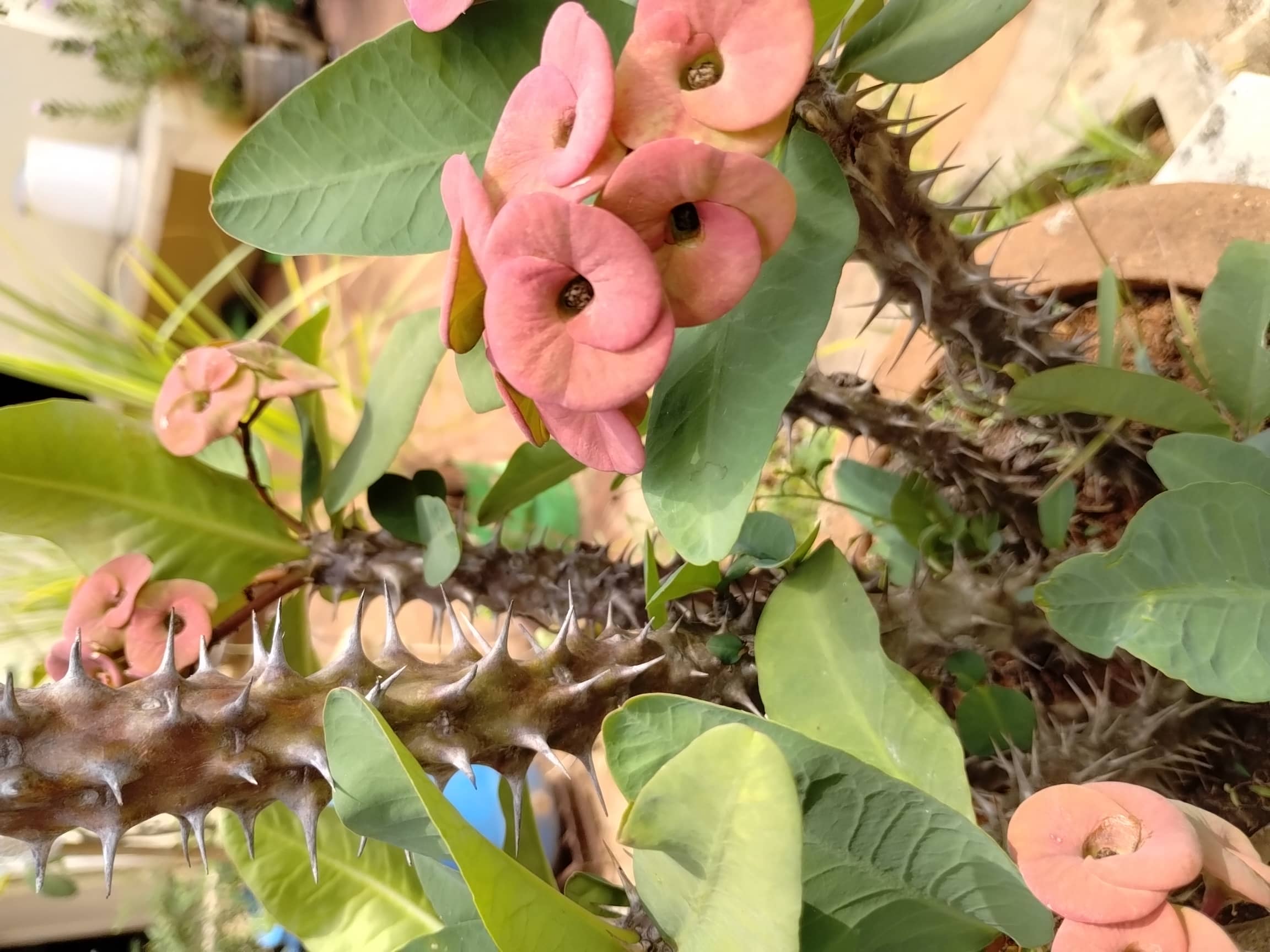
Euphorbia
Euphorbia Mili
Spiny succulent shrub featuring thorny stems and small, colorful petal-like brac...
Bromelia
Bromelia
Diverse family of tropical plants featuring striking rosettes of stiff, often co...
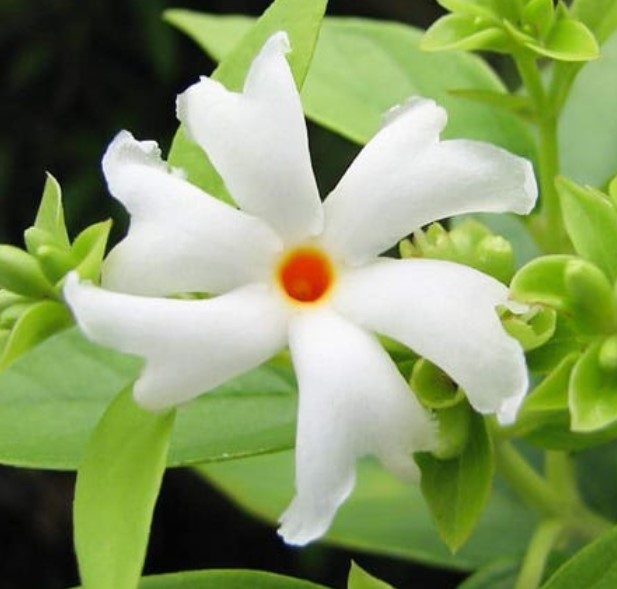
Night Jasmine (Parijat)
Nyctanthes arbor-tristis
Small white flowers with bright orange centers and coral-orange stalks that bloo...
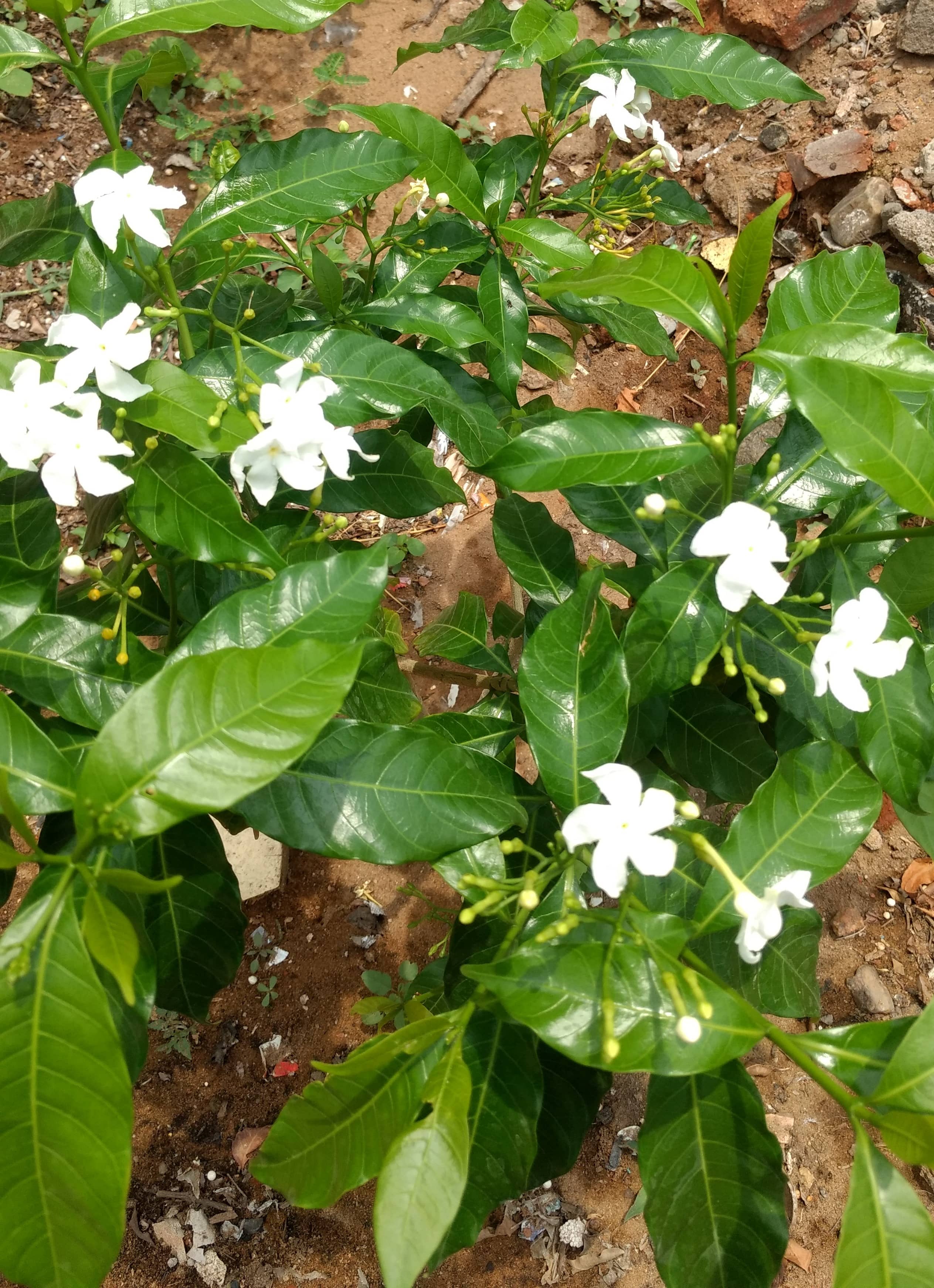
Pinwheel
Tabernaemontana divaricata
Elegant evergreen shrub with distinctive white flowers featuring five waxy petal...