
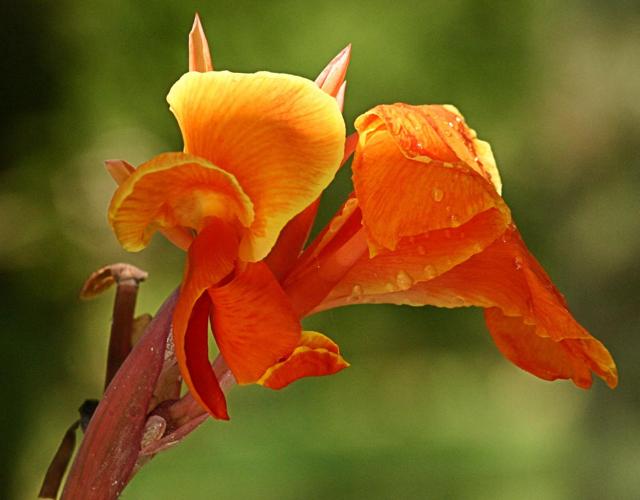
Canna lily
Canna indica
Basic Details
Floral Formula & Features
Ebracteate (no bracts), bilaterally symmetrical (zygomorphic), bisexual, 3 free sepals, 3 free petals, 1 functional stamen (others modified into petal-like staminodes), 3 fused carpels with inferior ovary. Highly modified flower structure unique to Cannaceae
- Name 'Canna' from Latin meaning 'reed' or 'cane' referring to hollow stems. 'Indian Shot' describes hard, round, black seeds historically used as shot for guns and beads for rosaries. Not related to true lilies despite common name
- Flowers 4-5 inches (10-12 cm) across with asymmetrical, iris-like form. Three sepals, three petals, and petal-like staminodes (modified stamens) create showy display. Colors include red, orange, yellow, pink, cream, and bicolors. Only one functional stamen
- Herbaceous rhizomatous perennial that blooms continuously from late spring through first frost (May-October). Grown as annual in cold climates, perennial in zones 7-11. Dies back to ground in winter, re-emerges from rhizomes in spring
- Grows 1.5-8 feet (0.5-2.5 m) tall depending on variety (dwarf types 1.5-3 feet, standard 4-6 feet, tall 6-8 feet). Lifespan of many years from rhizomes. Fast-growing, reaching full size in one season. Propagated by dividing rhizomes in spring
- Native to tropical and subtropical Americas from southern United States through Central America, Caribbean, and South America to northern Argentina. C. indica from West Indies. Now naturalized in tropical regions worldwide including Africa, Asia, and Australia
- Requires full sun with at least 6-8 hours of direct sunlight for best flowering (tolerates partial shade with reduced blooms). Thrives in heat and humidity. Needs consistently moist, rich soil. Can grow in shallow water (bog or pond margins). Frost tender (rhizomes hardy to zone 7 with mulch)
- Excellent for tropical-style gardens, mixed borders, containers, and water gardens. Attracts hummingbirds and butterflies. Rhizomes produce edible starch (Queensland arrowroot) used like tapioca. Young leaves and shoots edible when cooked. Deer resistant. Can spread aggressively in warm climates
Names in Different Languages
What is Floral Formula?
A floral formula is a symbolic representation of a flower's structure using letters, numbers, and special symbols. It provides a concise way to describe the arrangement and number of floral parts.
This formula describes the flower's symmetry, sepals, petals, stamens, and carpels in a standardized format.
Formula Sequence
- Bract: Br or Ebr
- Bracteole: Brl or Ebrl
- Symmetry: % (Radial) or ⊕ (Bilateral)
- Sex: ♀ (Female), ♂ (Male), or ⚥ (Bisexual)
- Calyx/Sepal: K<number> (Free or Fused)
- Corolla/Petal: C<number> (Free or Fused)
- Androecium: A<number> (Free or Fused)
- Gynaecium: G<number> (Superior or Inferior Ovary)
Symbol Meanings
- Numbers: Indicate quantity of parts
- Parentheses (): Parts are fused together
- Plus (+): Parts in different whorls
- Underline: Superior ovary position
- Overline: Inferior ovary position
- ∞: Numerous parts (too many to count)
Understanding floral formulas helps botanists quickly identify and classify flowers based on their structural characteristics.
Similar Flowers
Discover flowers that share botanical characteristics
Similar Characteristics
4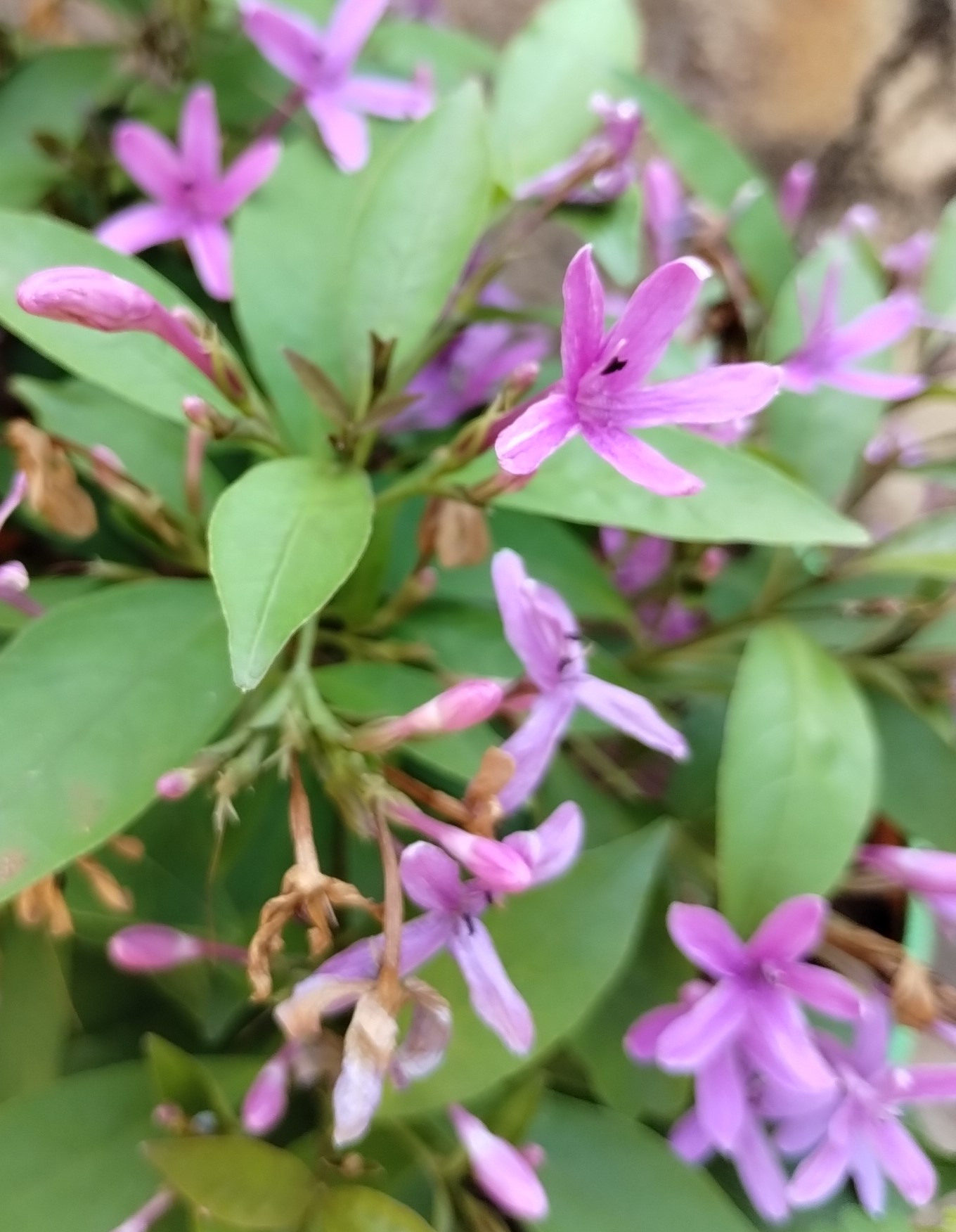
Pseuderanthemum
Pseuderanthemum
Striking tropical perennial shrub prized for its spectacular ornamental foliage ...
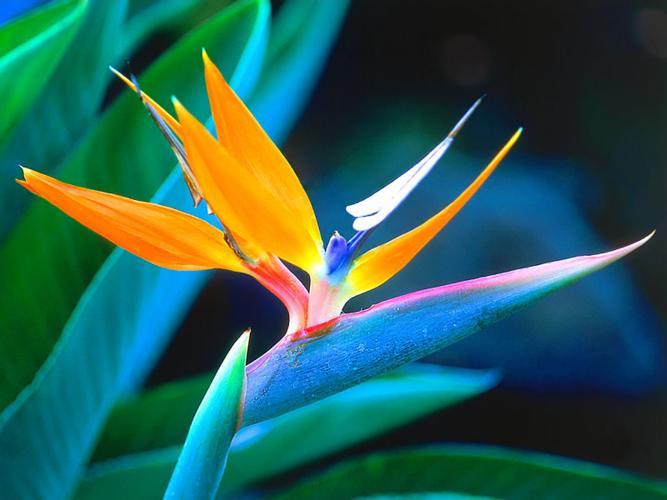
Bird of Paradise
Strelitzia reginae
Spectacular tropical perennial featuring exotic flowers that resemble a brightly...
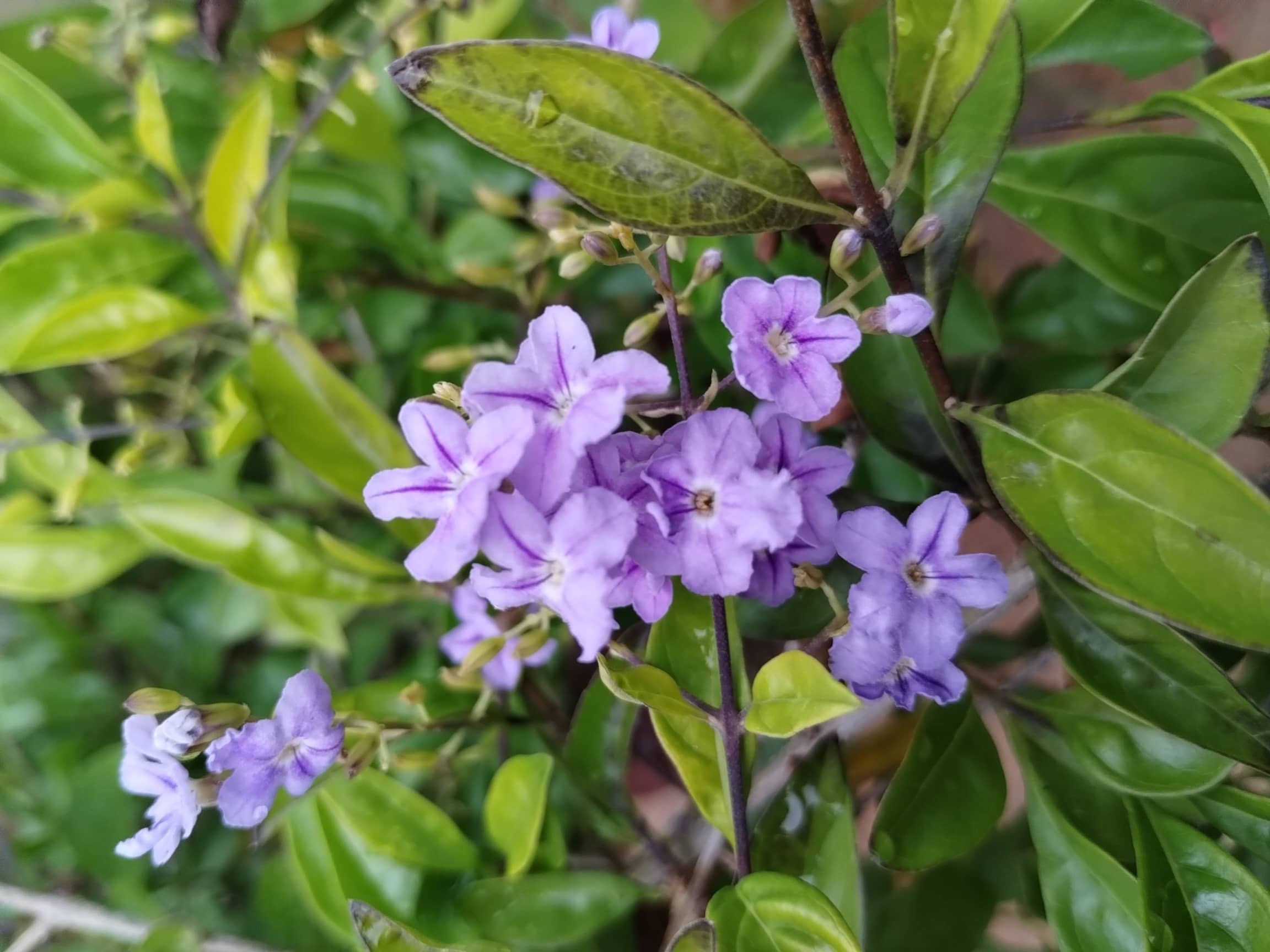
Duranta erecta
Duranta erecta
Versatile tropical shrub prized for both cascading clusters of small tubular flo...
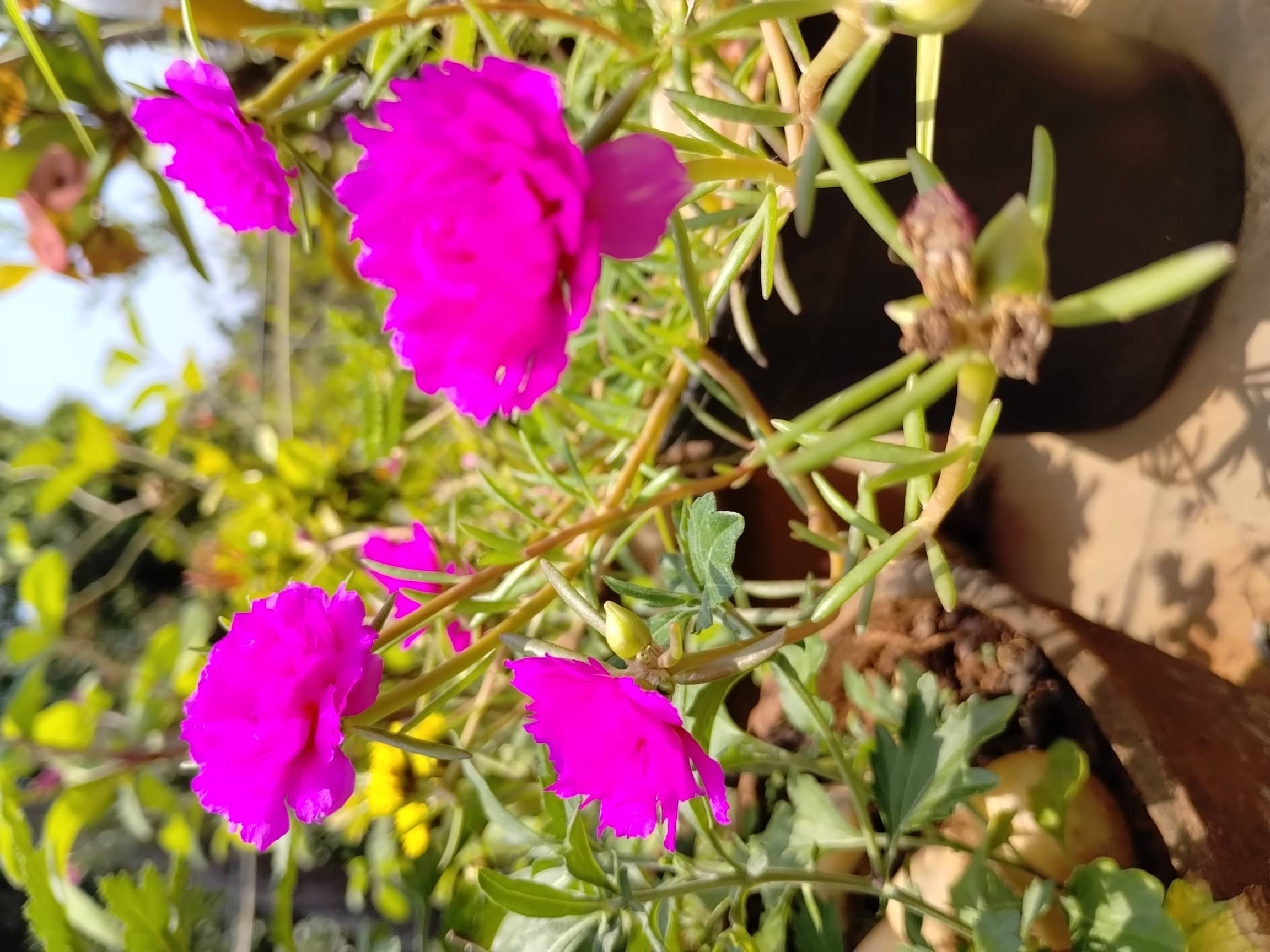
Portulaca
Portulaca
Charming succulent annual celebrated for its vibrant, rose-like flowers in a rai...