
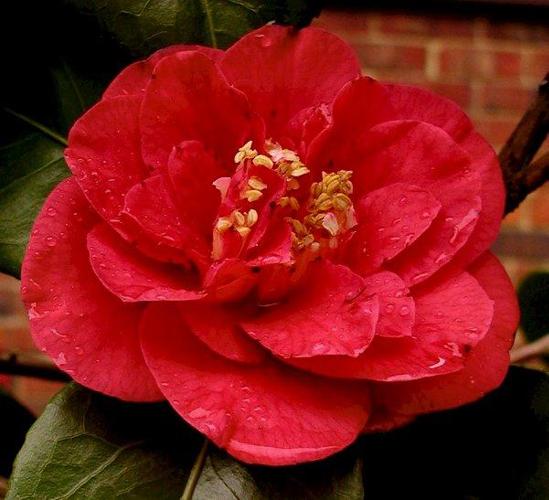
Camellia
Camellia japonica
Basic Details
Floral Formula & Features
Ebracteate (no true bracts, but sepals grade into petals), radially symmetrical (actinomorphic), bisexual, 5 sepals (often grading into petals), 5-9 free petals (more in double forms), numerous free stamens often fused at base into tube, 3-5 fused carpels with superior ovary
- Named after Jesuit botanist Georg Joseph Kamel (Latinized as 'Camellus') who studied Philippine plants in 17th century. Called 'Tsubaki' in Japan where it holds cultural significance. 'Winter Rose' describes the rose-like blooms appearing in cold months
- Flowers 2-5 inches (5-12 cm) across in single (5-8 petals), semi-double (2 or more rows), or fully double forms (many overlapping petals). Colors range from pure white through pink to deep red, with bicolors and picotees. Blooms have prominent yellow stamens in center (visible in single forms)
- Evergreen shrub or small tree. Bloom time varies by species: C. sasanqua (fall, October-December), C. japonica (winter-spring, December-April), C. sinensis (fall, used for tea production). Long-lived plants that improve with age
- Size varies by species and variety: dwarf forms 3-6 feet (1-2 m), medium 6-12 feet (2-4 m), large specimens to 20+ feet (6+ m). Lifespan of 50-100+ years, some specimens over 500 years old. Propagated from semi-hardwood cuttings, grafting, or air layering
- Native to eastern and southern Asia including China, Japan, Korea, Vietnam, Taiwan, and eastern Himalayas. C. sinensis (tea) from China and India. C. japonica from Japan, Korea, southern China. Found in mountain forests and woodland understories
- Prefers partial shade to filtered sunlight, especially protection from hot afternoon sun. Requires acidic soil (pH 5.5-6.5) rich in organic matter with excellent drainage. Needs consistent moisture but not waterlogged conditions. Cold hardiness varies (zones 6-10 depending on species)
- Ornamental varieties prized for winter/spring color in shade gardens. C. sinensis leaves processed into green, black, white, and oolong teas. Flowers attract early-season pollinators. Deer resistant. Popular for bonsai, espalier, and container culture. Camellia oil from seeds used in cooking and cosmetics
Names in Different Languages
What is Floral Formula?
A floral formula is a symbolic representation of a flower's structure using letters, numbers, and special symbols. It provides a concise way to describe the arrangement and number of floral parts.
This formula describes the flower's symmetry, sepals, petals, stamens, and carpels in a standardized format.
Formula Sequence
- Bract: Br or Ebr
- Bracteole: Brl or Ebrl
- Symmetry: % (Radial) or ⊕ (Bilateral)
- Sex: ♀ (Female), ♂ (Male), or ⚥ (Bisexual)
- Calyx/Sepal: K<number> (Free or Fused)
- Corolla/Petal: C<number> (Free or Fused)
- Androecium: A<number> (Free or Fused)
- Gynaecium: G<number> (Superior or Inferior Ovary)
Symbol Meanings
- Numbers: Indicate quantity of parts
- Parentheses (): Parts are fused together
- Plus (+): Parts in different whorls
- Underline: Superior ovary position
- Overline: Inferior ovary position
- ∞: Numerous parts (too many to count)
Understanding floral formulas helps botanists quickly identify and classify flowers based on their structural characteristics.
Similar Flowers
Discover flowers that share botanical characteristics
Similar Characteristics
4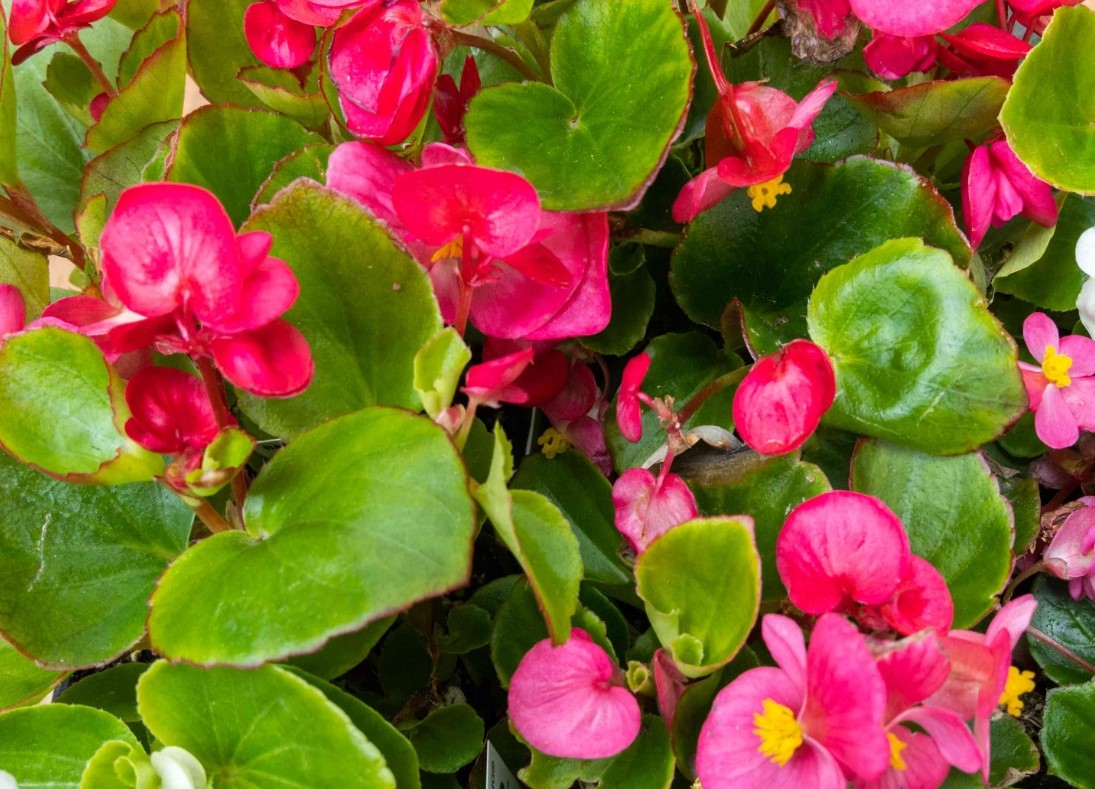
Begonia
Begonia
Versatile and diverse genus prized for both spectacular flowers and ornamental f...
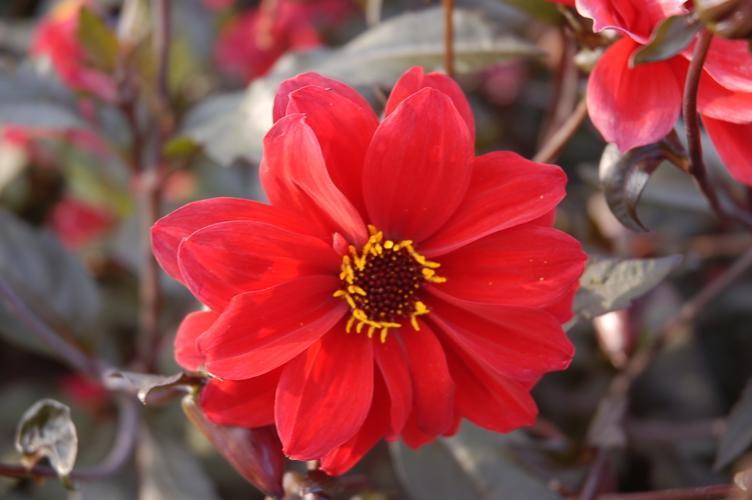
Dahlia
Dahlia
Spectacular tuberous perennial renowned for extraordinarily diverse flower forms...
AngelWing Jasmine (Star Jasmine)
Jasminum laurifolium, Jasminum nitidum
Unique jasmine with spectacular star or pinwheel-shaped flowers having 10-12 nar...
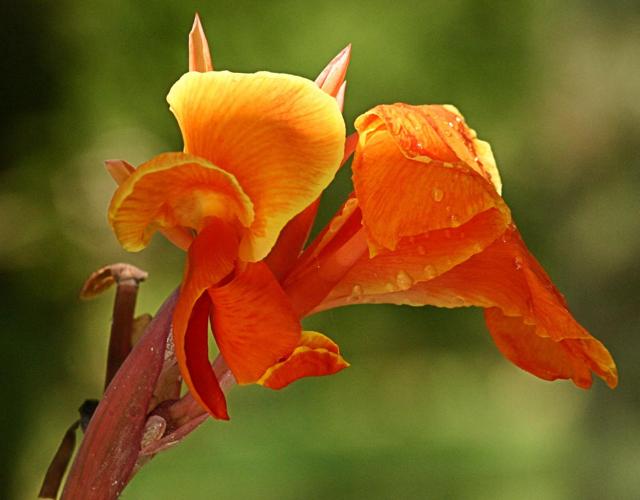
Canna lily
Canna indica
Bold tropical perennial featuring large, paddle-shaped leaves reminiscent of ban...