
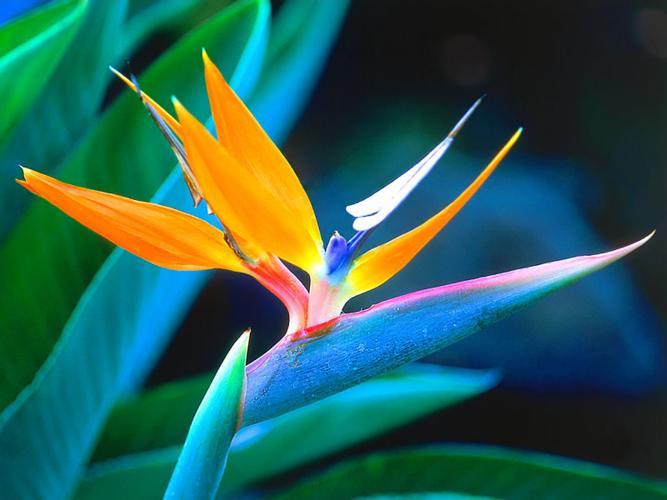
Bird of Paradise
Strelitzia reginae
Basic Details
Floral Formula & Features
Bilaterally symmetrical (zygomorphic), bisexual, 3 free sepals, 3 petals (2 fused forming arrow-shaped nectary, 1 free), 5 free stamens, 3 fused carpels with inferior ovary
- Name 'Strelitzia' honors Queen Charlotte of Mecklenburg-Strelitz, wife of King George III of England. 'Reginae' means 'of the queen.' Common name reflects the flower's resemblance to a bird of paradise with colorful plumage in flight
- Unique flower structure with 3 bright orange sepals and 3 blue petals (2 fused forming arrow-shaped nectary) emerging from a rigid, boat-shaped bract. Flowers measure 6-8 inches long. Each plant produces multiple flower stalks, blooming sequentially
- Evergreen perennial that blooms year-round in frost-free climates, with peak flowering in late winter to spring (February-May). Can live 50+ years. In nature, pollinated by sunbirds that perch on the sturdy bract
- Grows 4-6 feet (1.2-1.8 m) tall and 3-4 feet wide. Leaves can reach 18 inches long. Takes 3-5 years from seed to first bloom. Propagated by division of clumps or from seed (slow to germinate)
- Native to South Africa, specifically coastal regions of Eastern Cape Province and KwaZulu-Natal. Found in riverbanks and forest margins. Now cultivated worldwide in tropical and subtropical zones
- Thrives in full sun to partial shade with at least 4-6 hours of direct sunlight for best blooming. Prefers well-draining, fertile soil. Drought tolerant once established but blooms more with regular water. Frost sensitive (damaged below 28°F/-2°C)
- Excellent long-lasting cut flower (7-14 days in vase). Attracts hummingbirds in tropical regions. All parts mildly toxic if ingested. Popular in tropical landscaping, poolside plantings, and as dramatic container specimens. Symbol of paradise, freedom, and magnificence
Names in Different Languages
What is Floral Formula?
A floral formula is a symbolic representation of a flower's structure using letters, numbers, and special symbols. It provides a concise way to describe the arrangement and number of floral parts.
This formula describes the flower's symmetry, sepals, petals, stamens, and carpels in a standardized format.
Formula Sequence
- Bract: Br or Ebr
- Bracteole: Brl or Ebrl
- Symmetry: % (Radial) or ⊕ (Bilateral)
- Sex: ♀ (Female), ♂ (Male), or ⚥ (Bisexual)
- Calyx/Sepal: K<number> (Free or Fused)
- Corolla/Petal: C<number> (Free or Fused)
- Androecium: A<number> (Free or Fused)
- Gynaecium: G<number> (Superior or Inferior Ovary)
Symbol Meanings
- Numbers: Indicate quantity of parts
- Parentheses (): Parts are fused together
- Plus (+): Parts in different whorls
- Underline: Superior ovary position
- Overline: Inferior ovary position
- ∞: Numerous parts (too many to count)
Understanding floral formulas helps botanists quickly identify and classify flowers based on their structural characteristics.
Similar Flowers
Discover flowers that share botanical characteristics
Similar Characteristics
4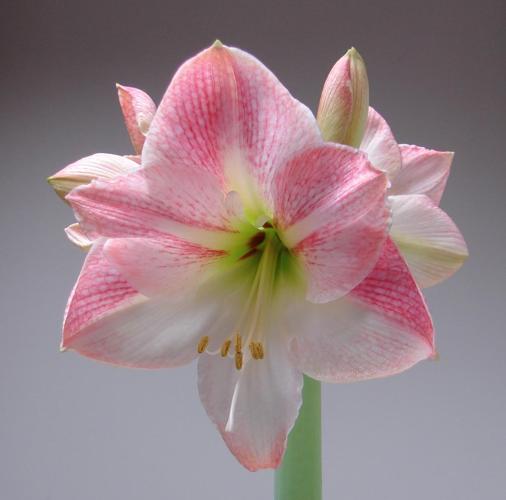
Amaryllis
Hippeastrum
Spectacular bulbous plant producing 2-6 large, trumpet-shaped flowers per stalk ...
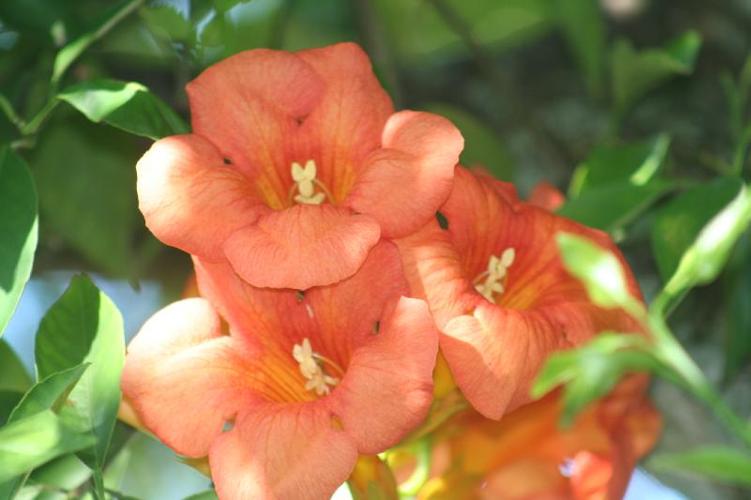
Trumpet Vine
Campsis radicans
Vigorous deciduous woody vine renowned for its spectacular clusters of trumpet-s...
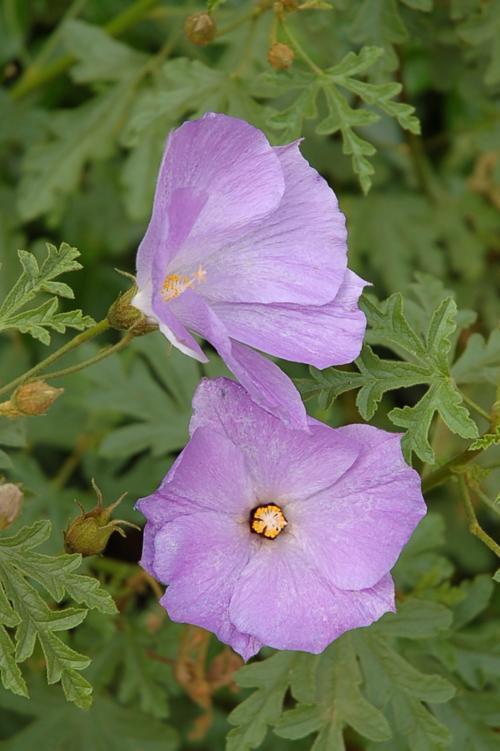
Pelargonium
Pelargonium
Popular flowering plant with rounded clusters of colorful blooms and aromatic le...
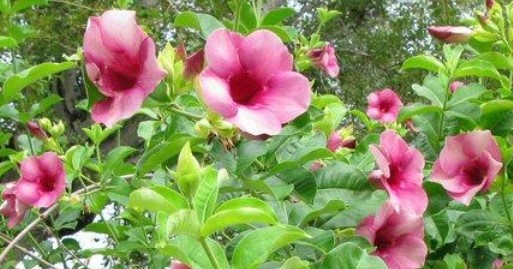
Mandevilla
Mandevilla
Spectacular tropical climbing vine renowned for its large, showy, trumpet-shaped...