
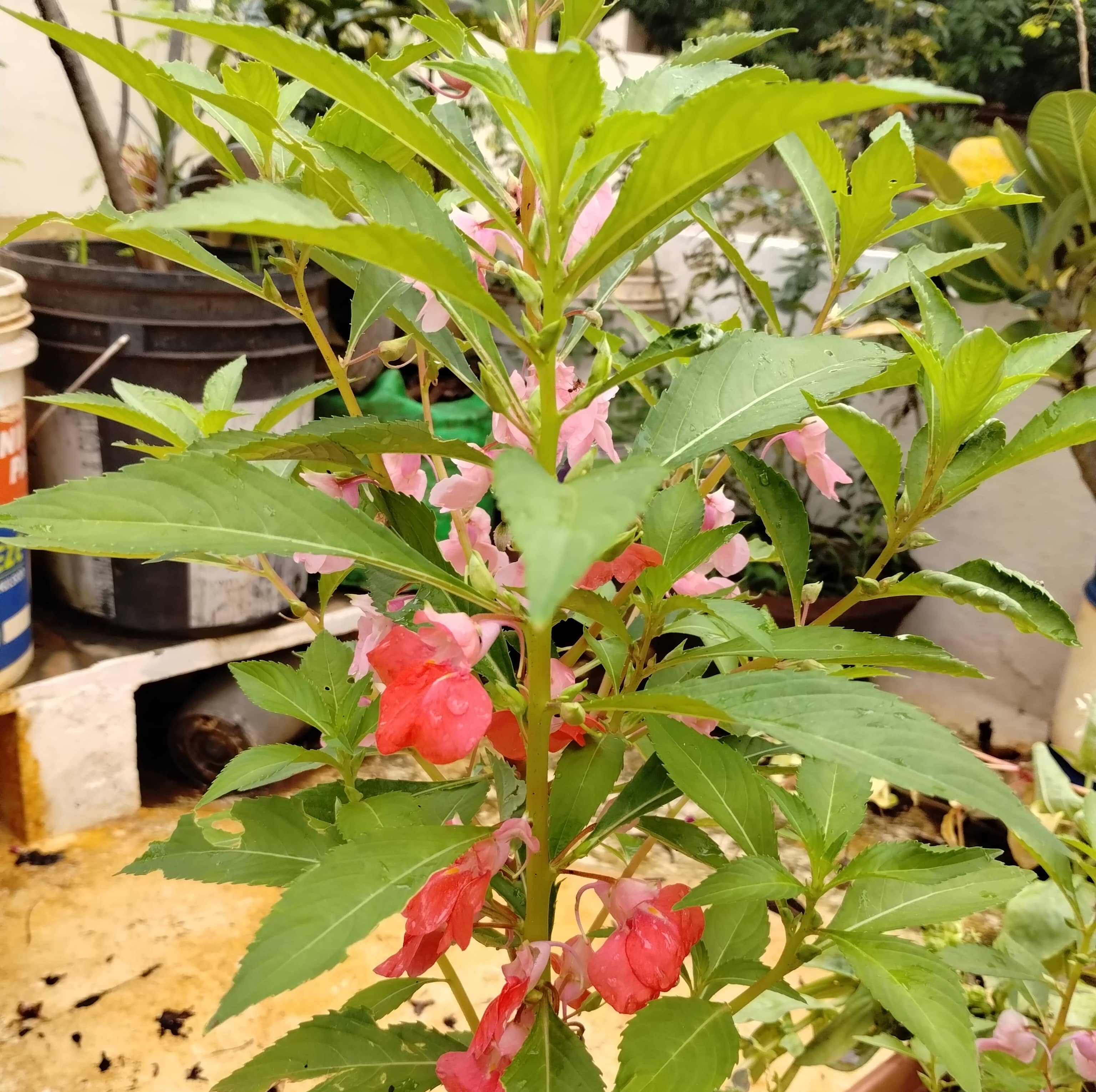
Balsam
Impatiens balsamina
Basic Details
Floral Formula & Features
Bilaterally symmetrical (zygomorphic), bisexual, 3 sepals (2 small lateral, 1 large saccate/spurred), 5 petals (appearing as 3 due to fusion of lateral pairs), 5 fused stamens, 5 fused carpels with superior ovary
- Name 'Impatiens' means 'impatient' in Latin, referring to explosive seed pods that burst at slightest touch when ripe, forcefully ejecting seeds up to 6 feet away. 'Balsamina' refers to the balsam-like sap
- Flowers 1-2 inches across, single or fully double (resembling small camellias or roses). Blooms nestle directly against stem in leaf axils. Colors include pink, red, purple, violet, white, and bicolors. Individual flowers last 5-7 days
- Tender annual that blooms from early summer through first frost (June-October). Succulent stems are brittle and translucent. Readily self-seeds, often returning year after year from dropped seeds
- Grows 1-2.5 feet (30-75 cm) tall with upright, columnar habit. Lifespan of one growing season (4-5 months). Propagated from seed, germinating in 7-14 days. Stems wilt dramatically if allowed to dry out
- Native to India, Southeast Asia, and southern China. Cultivated in Asian gardens for centuries. Introduced to Europe in 16th century. Now naturalized in warm, moist regions worldwide
- Prefers partial shade to full shade with 2-4 hours of morning sun. One of few annuals that blooms well in shade. Requires consistently moist, well-drained soil. Wilts quickly if soil dries out but recovers with watering
- Excellent for shady borders, containers, and woodland gardens. Attracts hummingbirds and bees. Deer resistant. Sap traditionally used in Asia for dyeing nails and treating skin conditions. Seeds edible when cooked (related to edible Himalayan balsam)
Names in Different Languages
What is Floral Formula?
A floral formula is a symbolic representation of a flower's structure using letters, numbers, and special symbols. It provides a concise way to describe the arrangement and number of floral parts.
This formula describes the flower's symmetry, sepals, petals, stamens, and carpels in a standardized format.
Formula Sequence
- Bract: Br or Ebr
- Bracteole: Brl or Ebrl
- Symmetry: % (Radial) or ⊕ (Bilateral)
- Sex: ♀ (Female), ♂ (Male), or ⚥ (Bisexual)
- Calyx/Sepal: K<number> (Free or Fused)
- Corolla/Petal: C<number> (Free or Fused)
- Androecium: A<number> (Free or Fused)
- Gynaecium: G<number> (Superior or Inferior Ovary)
Symbol Meanings
- Numbers: Indicate quantity of parts
- Parentheses (): Parts are fused together
- Plus (+): Parts in different whorls
- Underline: Superior ovary position
- Overline: Inferior ovary position
- ∞: Numerous parts (too many to count)
Understanding floral formulas helps botanists quickly identify and classify flowers based on their structural characteristics.
Similar Flowers
Discover flowers that share botanical characteristics
Similar Characteristics
4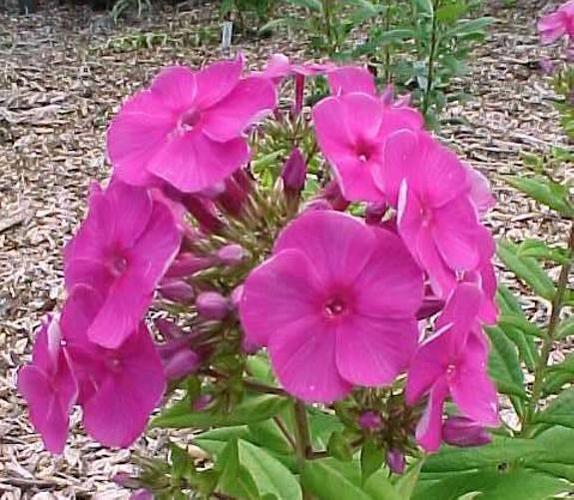
Phlox
Phlox paniculata
Fragrant flowers in dense clusters ranging from creeping ground covers to tall b...
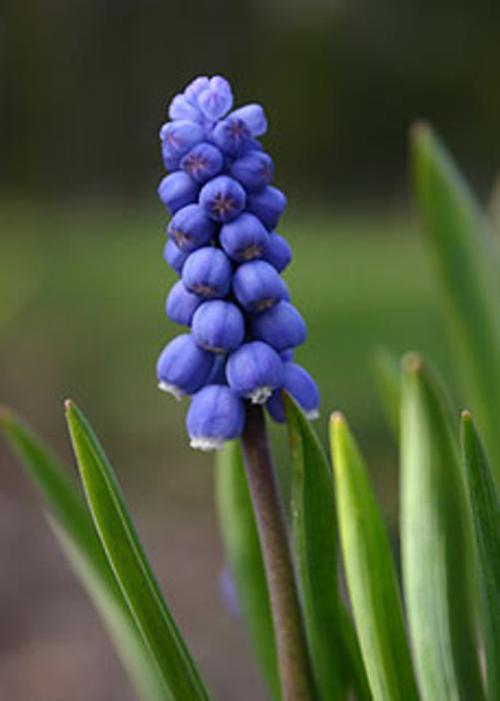
Grape hyacinth
Muscari
Charming spring bulb featuring dense spikes of tiny, urn-shaped flowers in rich ...
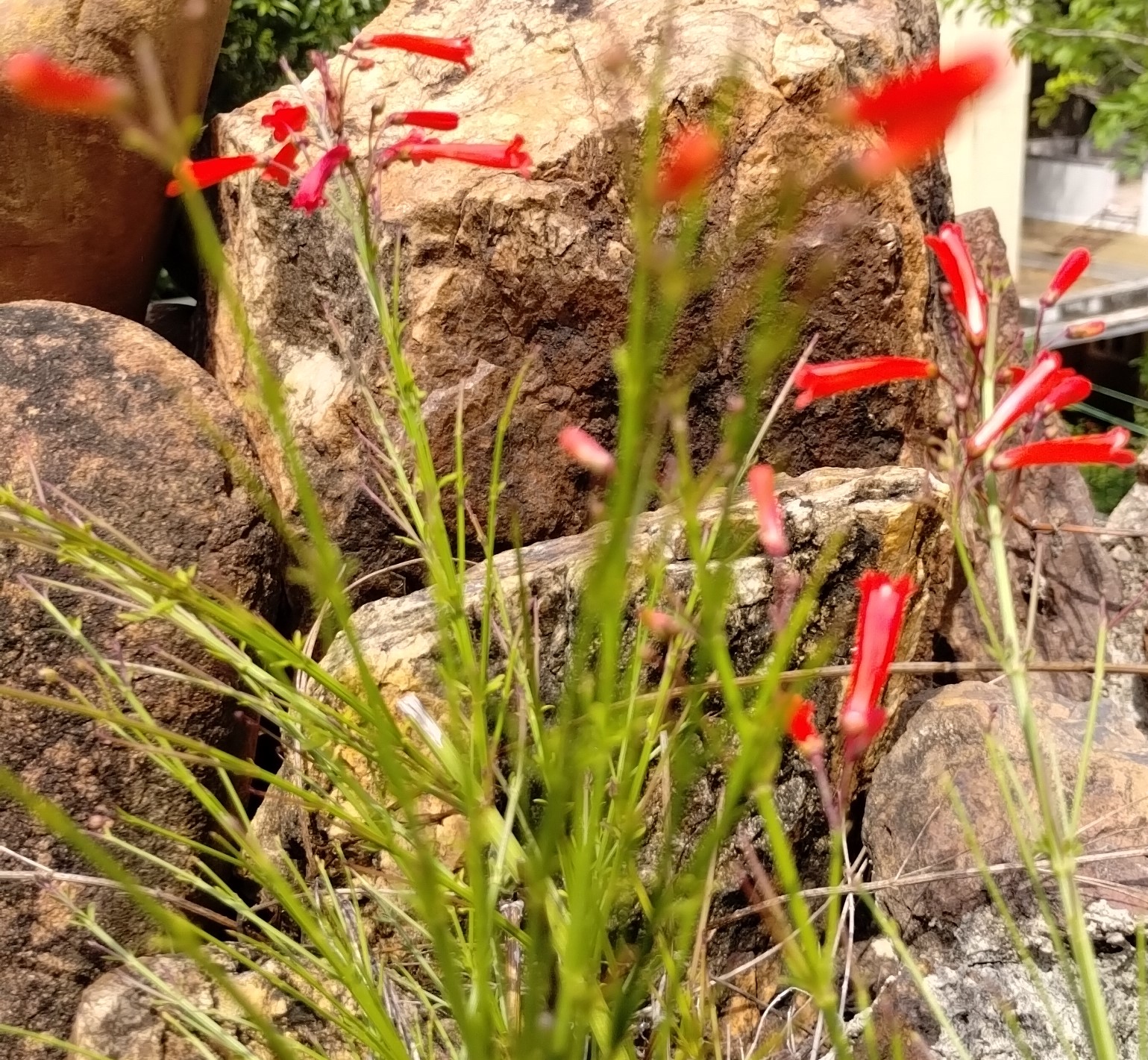
Russelia
Russelia equisetiformis
Spectacular tropical subshrub renowned for its graceful, cascading habit and pro...
Leadwort
Plumbago auriculata
Vigorous evergreen to semi-evergreen shrub featuring abundant clusters of delica...