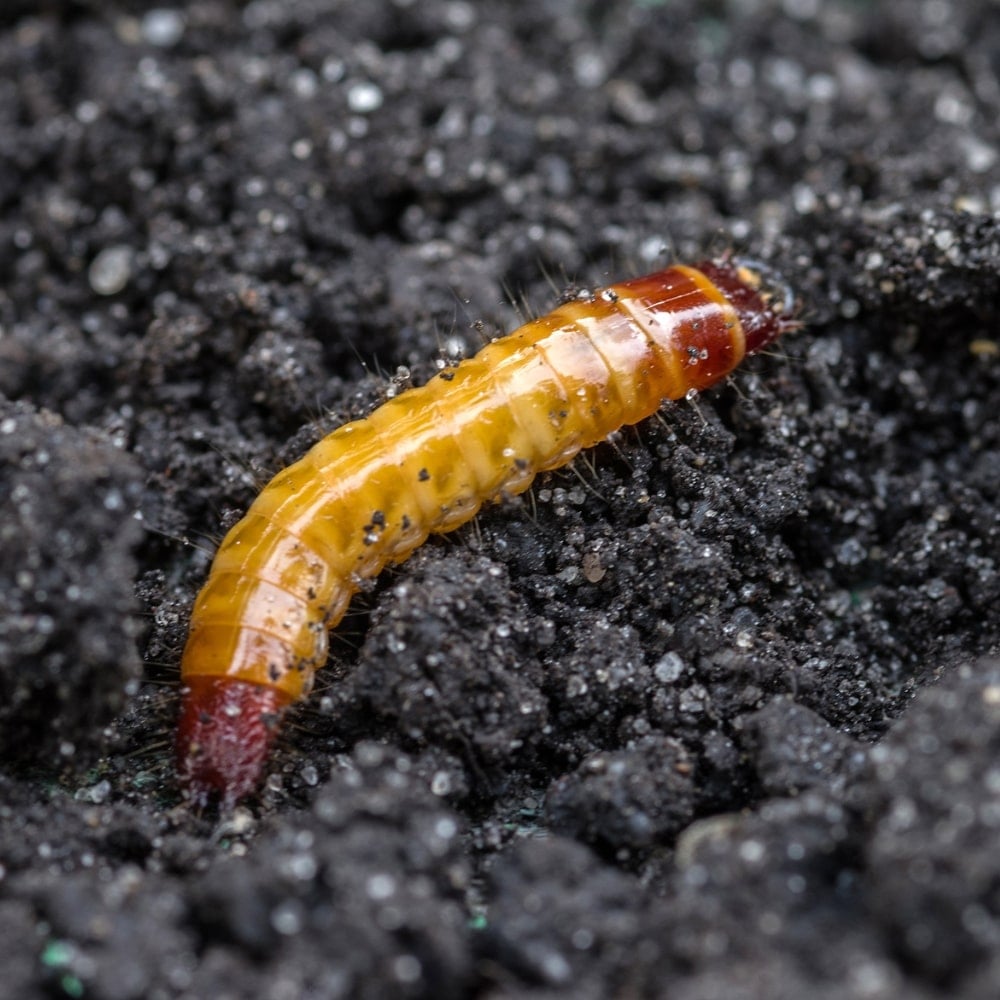
Wireworm Pest
Agriotes spp.
Basic Details
Description
Taxonomy
Features
Translations
Basic Details
NameWireworm Pest
DescriptionWireworms are hard-bodied larvae of click beetles that tunnel into seeds, roots, and tubers. Learn to identify and manage these destructive soil pests now.
TypeInsect
FamilyElateridae
GenusAgriotes
Taxonomy & Features
PhylumArthropoda
SubphylumHexapoda
ClassInsecta
OrderColeoptera
Features
- Named 'wireworm' due to their long, slender, and distinctively hard, wire-like bodies. They are the larvae of click beetles (Elateridae)
- Elongated, cylindrical larvae with a tough, shiny skin. Color ranges from yellow to reddish-brown. Have three pairs of small legs near the head
- Generalist soil feeders. They tunnel into germinating seeds, roots, and underground tubers like potatoes and carrots
- Cause poor seedling emergence by eating seeds. Bored holes in tubers and roots make them unmarketable and prone to rot
- Can live in the soil for 2-6 years as larvae. They move up and down in the soil profile depending on temperature and moisture
- Larvae grow up to 15-30 mm long. Very tough to the touch compared to other caterpillars
- Most active in cool, moist soil in spring and fall. Prefer old pastures or grassy areas
- Mainly damage potatoes, carrots, corn, wheat, and newly planted vegetable seedlings
- Avoid planting susceptible crops in land that was recently grass or pasture. Frequent cultivation can help reduce populations
- Trapping with pieces of potato buried in the soil can help monitor and remove them for small gardens. Beneficial nematodes can also be effective
Names in Different Languages
Latin / ScientificAgriotes spp.
English (Alternate)Click beetle larva
Hindiತಾರ್ಕೃಮಿ (Taarkrimi)
Tamilಕಂಬಿಪ್ಪುಳು (Kambippuzhu)
Teluguವೈರ್ ವಾರ್ಮ್ (Wirewarm)
Malayalamವಯರ್ ಪುಳು (Wire puzhu)
Kannadaವೈರ್ ಹುಳು (Wire hulu)
Sanskritತಂತು-ಕೃಮಿ (Tantu-krimi)
Bengaliವಾರ್ವಾರ್ಮ್ (Wireworm)
Frenchtaupin
Russianಪ್ರೊವೊಲೊಚ್ನಿಕ್ (provolochnik)
Spanishgusano de alambre
GermanDrahtwurm