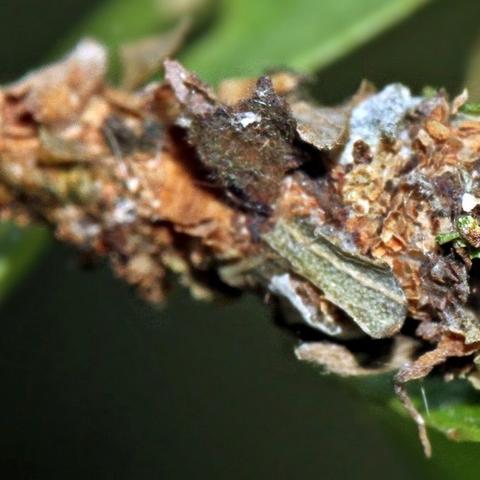
Bagworm
Thyridopteryx ephemeraeformis
Basic Details
Description
Taxonomy
Features
Translations
Basic Details
NameBagworm
DescriptionBagworms build needle-covered silk bags that hang from branches, camouflaging their destructive feeding. Identify these protective cases early to prevent total evergreen defoliation.
TypeInsect
FamilyPsychidae
GenusThyridopteryx
Taxonomy & Features
PhylumArthropoda
SubphylumHexapoda
ClassInsecta
OrderLepidoptera
SubfamilyOiketicinae
Features
- A unique pest (Thyridopteryx ephemeraeformis) known for creating protective conical bags made of silk and pieces of the host plant's leaves or needles
- Highly destructive to evergreen trees like arborvitae, juniper, pine, and cedar, but can also attack many deciduous trees
- The larvae (caterpillars) live inside the bags, enlarging them as they grow. They crawl along branches, carrying the bag with them as they feed
- Initial feeding damage on evergreens appears as small, brown, dead spots on the needles. Large populations can completely strip a tree in a few weeks
- Severely defoliated evergreen trees often die, as they cannot regenerate new needles from old wood. Deciduous trees are typically more resilient
- Bags can range from 1 cm to 15 cm in length and are often mistaken for small pine cones or dead clumps of foliage
- Females never leave the bag; they mate, lay up to 1,000 eggs inside the case, and then die. The eggs overwinter safely inside the mother's bag
- In spring, tiny larvae emerge and 'balloon' to nearby trees on silk threads or crawl to new branches to start their own bags
- Manage by hand-picking and destroying all bags during the fall and winter. Ensure you remove the silk band that encircles the twig to prevent girdling
- Control by applying organic Bacillus thuringiensis (Bt) or neem oil in early summer when the larvae are young and most vulnerable
Names in Different Languages
Latin / ScientificThyridopteryx ephemeraeformis
English (Alternate)Evergreen bagworm
Hindiबैगवर्म (Bagworm)
Tamilபைப்புழு (Paippuzhu)
Teluguసంచీ పురుగు (Sanchi purugu)
Malayalamബാഗ് വേം (Bāg vēm)
Kannadaಚೀಲದ ಹುಳು (Cīlada huḷu)
Sanskritकोश-कीट (Kośa-kīṭa)
Bengaliব্যাগওয়ার্ম (Bagworm)
Frenchchenille à fourreau
Russianмешочница (meshochnitsa)
Spanishgusano de bolsa
GermanSackträger