
Sesame (Gingelly) Oil Safety Inspection
Detect cheaper oil blending and colors in Sesame Oil
Inspection Guide
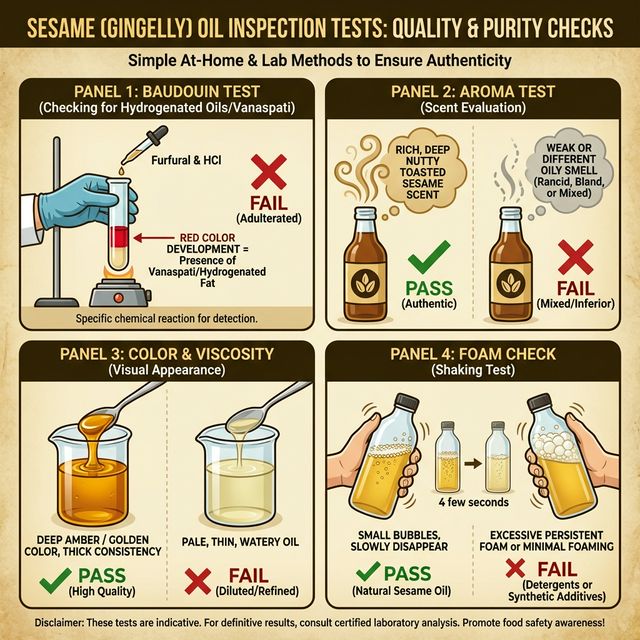
Click to enlarge
Sesame (Gingelly) Oil Purity Guide
Pure sesame oil is rich in antioxidants but is often blended with cheaper soybean or sunflower oils to increase profit margins.
1. The Aroma Test:
Sesame oil has an unmistakable, deep, toasted nutty aroma. If the scent is weak or resembles regular cooking oil, it's definitely blended.
2. The Color & Viscosity Check:
Pure sesame oil is deep amber to golden brown and is slightly thicker (more viscous) than sunflower or soybean oil. If the oil is pale yellow or feels thin/watery, it is likely adulterated.
3. The Persistence of Foam:
Shake the oil bottle. Pure sesame oil produces fine bubbles that persist for some time. Bubbles that disappear instantly or forming large soapy suds indicate adulteration or chemical processing.
4. The Clarity Scan:
Check for any fine particles or sediment. While some natural sediment is okay in cold-pressed oil, cloudiness throughout indicates mixing with crude oils.
Quick Safety Tips
- Check for deep amber color and thick consistency
- Must have strong toasted nutty aroma
- Look for "Gingelly" or "Cold Pressed" labels
- Perform the shake test for foam persistence
Chemical Concerns
Step 1: AI Visual Scan
New to BioLens? Try a sample test