
Sago (Sabudhana) Safety Inspection
Detect bleaching agents, talcum powder, and starches in Sago Pearls
Inspection Guide
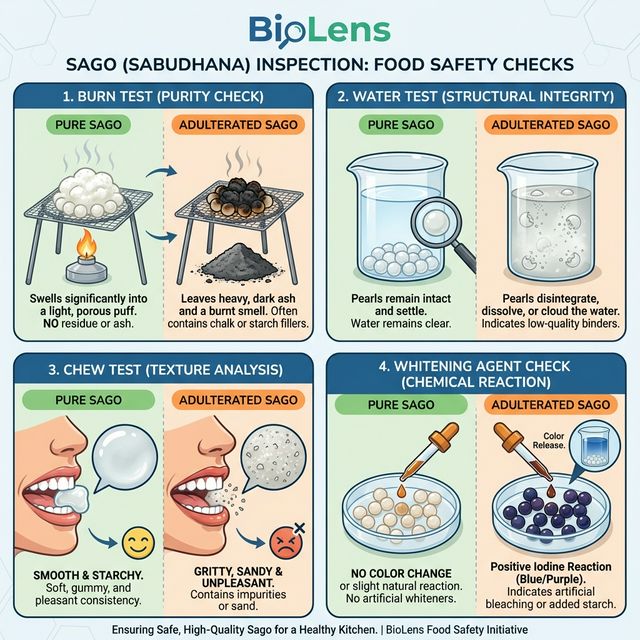
Click to enlarge
Sago (Sabudhana) Purity Checklist
Sago is often adulterated with bleaching chemicals, powders, and cheap starches.
1. The Burn Test: Burn a few sago pearls on a spoon. Pure sago swells and burns completely, leaving almost zero ash. Adulterated sago will leave a significant amount of grey/white ash (talc/sand).
2. Water Integrity Test: Soak sago in water. Pure pearls stay intact and the water remains mostly clear. Adulterated sago often disintegrates or turns the water milky/colored immediately.
3. Chew Test: Chew a raw pearl. Pure sago is smooth and starchy. A gritty or sandy crunch indicates adulteration with talcum powder or fine sand.
4. Whitening Agent Check: Observe the color change during soaking. Sago treated with heavy bleaching agents (like acids) may have an unnaturally brilliant white shine and can release a sharp, acrid smell when first wet.
Quick Safety Tips
- Perform the burn test - pure sago leaves no ash
- Check for grit or sand when chewing a sample
- Avoid unnaturally "brilliant white" sago with a chemical smell
- Ensure pearls do not instantly disintegrate in water
What CANNOT be Verified (Lab-Only)
Invisible Risks (Lab-Only):
* Sulfuric Acid Residue: Industrial acids used for cleaning require pH testing and sulfate analysis.
* Bleaching Byproducts: Chlorinated compounds from high-strength bleaches require laboratory quantification.
Chemical Concerns
Step 1: AI Visual Scan
New to BioLens? Try a sample test