
Rice (Raw Grain) Safety Inspection
Detect plastic rice and industrial polish in raw rice grains
Inspection Guide
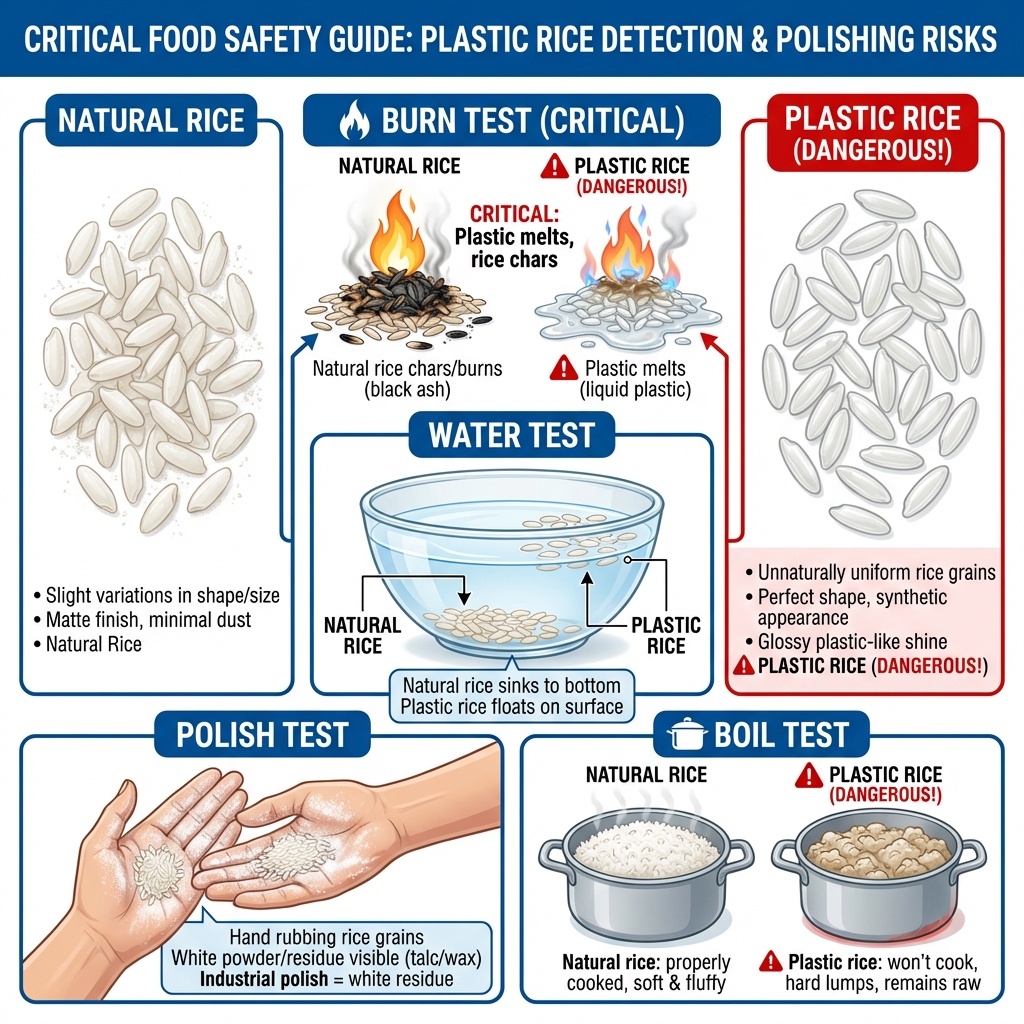
Click to enlarge
Rice Purity and Plastic Detection
Rice is adulterated with plastic rice (synthetic polymer shaped like rice) and polished with industrial oil, wax, or harmful chemicals.
1. The Water Float Test:
Fill a glass with water and drop a handful of rice. Natural rice grains will sink to the bottom. Plastic rice floats on the surface or stays suspended in water because synthetic materials are less dense than natural rice.
2. The Burn Test (Most Effective):
Take a few grains and burn them with a lighter or match. Natural rice will char, turn black, and produce an ash-like smell (burnt grain smell). Plastic rice will melt, produce a plastic-like smell, form a ball/blob, and may produce black smoke with chemical odor.
3. The Mortar-Pestle Test:
Take some rice grains and try to crush them in a mortar. Natural rice will break into powder with some effort. Plastic rice is difficult to break and makes a distinct sound when crushed (like plastic pieces clicking together). It may also bounce back instead of breaking.
4. The Boil Test:
Boil rice in water. Natural rice will cook and become soft. Plastic rice will remain hard or form a thick sticky layer on top of the pot. The water may also become cloudy with a plastic film.
5. The Polishing Check:
Rub a handful of rice between your palms. If white powder or oily residue comes off easily, the rice has been polished with industrial talc, wax, or oil. Natural rice has minimal dust.
Quick Safety Tips
- CRITICAL: Perform burn test - plastic rice is extremely harmful
- Water test - natural rice sinks completely
- Boil test - plastic won't cook
- Buy rice from certified sources only
Chemical Concerns
Step 1: AI Visual Scan
New to BioLens? Try a sample test