
Ragi (Finger Millet) Safety Inspection
Detect artificial color and grit in Ragi grains
Inspection Guide
Click to enlarge
Ragi Purity Inspection
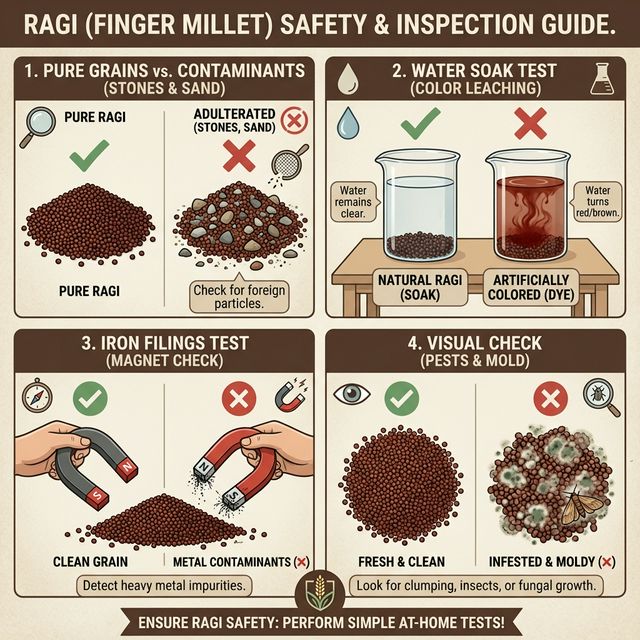
Ragi is a highly nutritious millet but can be adulterated with similar looking low-grade grains, sand, or colored with dangerous dyes.
1. The Water Color Test:
Soak a handful of Ragi in water for 30 minutes. If the water turns pink, red, or bright yellow, it indicates presence of artificial dyes. Natural Ragi color is stable.
2. The White Paper Rub:
Take some Ragi grains and rub them against a white piece of paper. If the paper picks up significant color streaks, it points toward surface dyeing.
3. The Grit & Stone Check:
Spread the Ragi on a flat white plate. Look for tiny stones or sand particles that match the Ragi's color. Natural Ragi should be clean and dust-free.
4. Visual Uniformity:
Natural Ragi grains have a deep reddish-brown color with slight natural variation. Unnaturally bright or uniform color across all grains is a sign of processing or dyeing.
Quick Safety Tips
- Perform water soak test for dyes
- Visual check for stones and grit
- Buy from trusted organic sources
- Wash thoroughly before grinding or cooking
Chemical Concerns
Step 1: AI Visual Scan
New to BioLens? Try a sample test