
Oats Safety Inspection
Detect bleaching agents and pesticide residues in oats
Inspection Guide
Click to enlarge
Oats Purity & Chemical Check
Oats can be treated with bleaching agents to look whiter or contain harmful pesticide residues like glyphosate from intensive farming.
1. The Color Check:
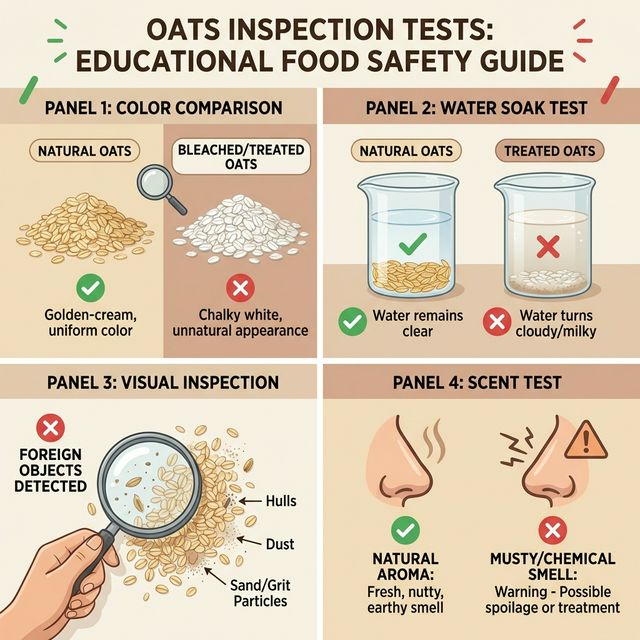
Natural oats have a golden-cream, slightly grayish-beige color. If the oats look chalky white or unnaturally bright, they may have been treated with bleaching agents or mixed with chalk powder.
2. The Water Clarity Test:
Soak a handful of oats in water for 10 minutes. Natural oats will keep the water relatively clear (slightly yellowish). If the water becomes milky white or cloudy immediately, it indicates the presence of chalk powder or bleaching residues.
3. The Scent Test:
Natural oats have a mild, nutty, earthy aroma. If you detect a musty, chemical, or "cleaner-like" smell, it indicates either spoilage or heavy chemical treatment for preservation.
4. Visual Grain Integrity:
Examine the flakes. Natural oats have varying sizes and slight imperfections. Unnaturally perfect, uniform, and white flakes are often a sign of excessive chemical processing.
Quick Safety Tips
- Choose organic oats to avoid glyphosate residues
- Avoid unnaturally white or "perfect" looking oats
- Soak oats before cooking to reduce surface residues
- Check for a natural nutty aroma
Chemical Concerns
Step 1: AI Visual Scan
New to BioLens? Try a sample test