
Mustard Oil Safety Inspection
Detect toxic Argemone oil and mineral oil in mustard oil
Inspection Guide
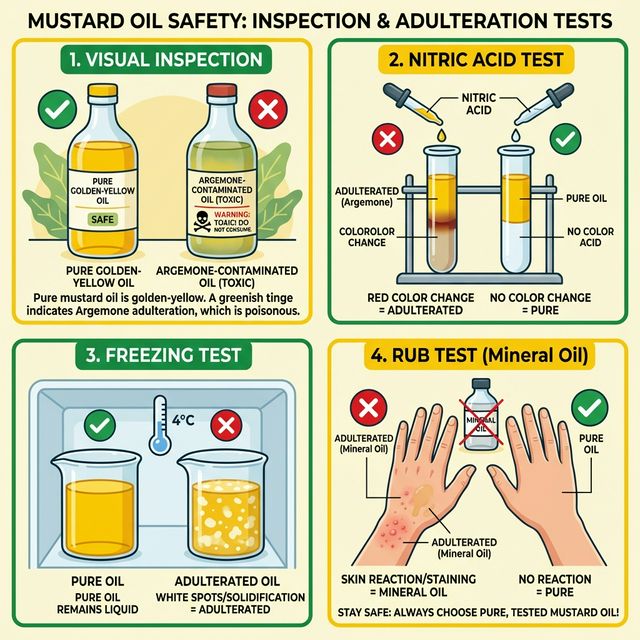
Click to enlarge
Mustard Oil Adulteration Check
Mustard oil is frequently adulterated with Argemone oil, which is highly toxic and can cause fatal conditions like epidemic dropsy.
1. The Nitric Acid Test (Advanced):
Take a small sample of oil in a test tube and add a few drops of concentrated nitric acid. Shake gently and heat. If it develops an orange-yellow to reddish color, it confirms the presence of Argemone oil. *Caution: Use professional help for chemical tests.*
2. The Color & Greenish Tint Check:
Pure mustard oil is a clear golden-yellow. If you notice a greenish tinge, it is a strong indicator of Argemone oil contamination which contains toxic alkaloids.
3. The Freezing Test:
Place a sample of mustard oil in a small container and put it in the refrigerator for 2-3 hours. Pure mustard oil remains liquid. If you see white spots or solid layers forming, it indicates adulteration with palm oil, lard, or other cheap saturated fats.
4. The Rub Test:
Take a few drops of oil and rub them between your palms. Pure oil has a strong, pungent, characteristic mustard smell. If the smell is weak or you detect a chemical/mineral oil odor, it is likely adulterated.
Quick Safety Tips
- Buy AGMARK certified mustard oil only
- Avoid oil with a greenish tinge (indicates toxicity)
- Perform the refrigerator test for palm oil detection
- Expect a strong, eyes-watering pungency
Chemical Concerns
Step 1: AI Visual Scan
New to BioLens? Try a sample test