
Groundnut Oil Safety Inspection
Detect palm oil and argemone oil in Groundnut Oil
Inspection Guide
Click to enlarge
Groundnut (Peanut) Oil Inspection
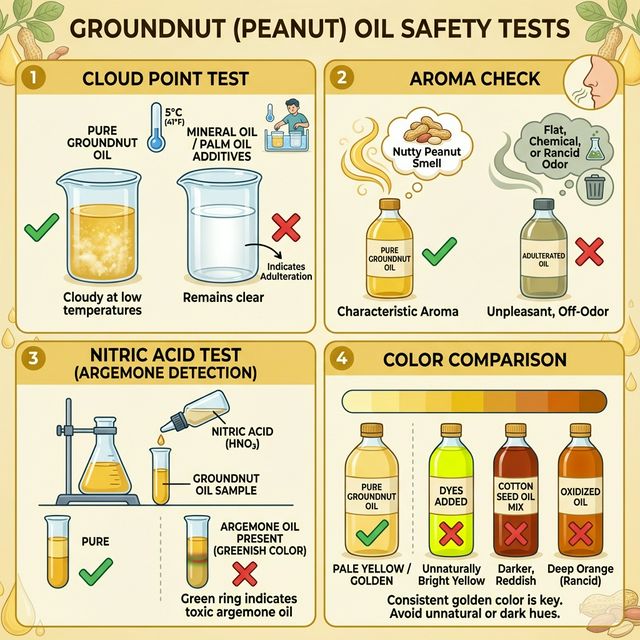
Groundnut oil is prized for its high smoke point and flavor, making it a target for adulteration with cheaper palm or cottonseed oils.
1. The Aroma Check:
Natural groundnut oil has a very strong, distinct nutty peanut smell. If the oil is odorless or has a flat, generic oily smell, it's either highly refined or mixed with cheaper oils.
2. The Refrigeration Test:
Groundnut oil has a different cloud point than palm oil. Chill the oil. If separate layers form or if it solidifies completely at moderate cold, it likely contains palm oil.
3. Color Observation:
Pure cold-pressed groundnut oil is pale yellow to golden. If it's unnaturally bright yellow (dyes) or has a reddish tint (cottonseed oil), it is likely adulterated.
4. Filter Paper Check:
Place a drop on filter paper. Pure oil spreads evenly. Some adulterants like mineral oil or castor oil will leave a translucent mark that doesn't disappear over time.
Quick Safety Tips
- Check for natural strong nutty aroma
- Observe color - should be naturally golden
- Buy filtered or cold-pressed for better quality
- Avoid oils that feel unnaturally "thick" or viscous
Chemical Concerns
Step 1: AI Visual Scan
New to BioLens? Try a sample test