
Coconut Oil Safety Inspection
Detect mineral oil and cheaper oil adulteration in Coconut Oil
Inspection Guide
Click to enlarge
Coconut Oil Purity Check
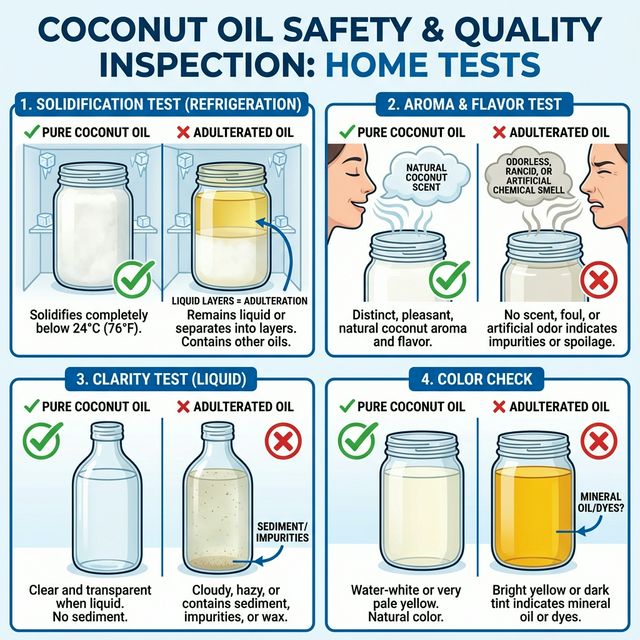
Coconut oil is frequently adulterated with mineral oil or cheaper vegetable oils. Pure coconut oil has unique physical properties.
1. The Freezing Test:
Pure coconut oil solidifies completely into a white solid at temperatures below 24°C (75°F). Place a small sample in the refrigerator for 2 hours. If any part remains liquid or forms a separate layer, it's adulterated.
2. The Clarity Test:
In liquid state, pure coconut oil should be crystal clear like water. Any cloudiness, sediment, or yellow/brown tint indicates impurities or mixing with other oils.
3. Aroma & Flavor:
Pure oil has a distinct, pleasant coconut aroma. If it has no smell, a rancid odor, or an artificial "toasted" scent, it is likely refined or adulterated.
4. The Foam Check:
When pure coconut oil is shaken, it should not produce excessive or persistent foam. Large, soap-like bubbles indicate chemical additives or improper refining.
Quick Safety Tips
- Perform the refrigerator solidification test
- Check for water-like clarity in liquid state
- Avoid oils with artificial or chemically sweet smells
- Look for 100% pure cold-pressed markings
Chemical Concerns
Step 1: AI Visual Scan
New to BioLens? Try a sample test