
Besan (Gram Flour) Safety Inspection
Detect Kesari dal flour and yellow dye in besan
Inspection Guide
Click to enlarge
Besan (Gram Flour) Adulteration Detection
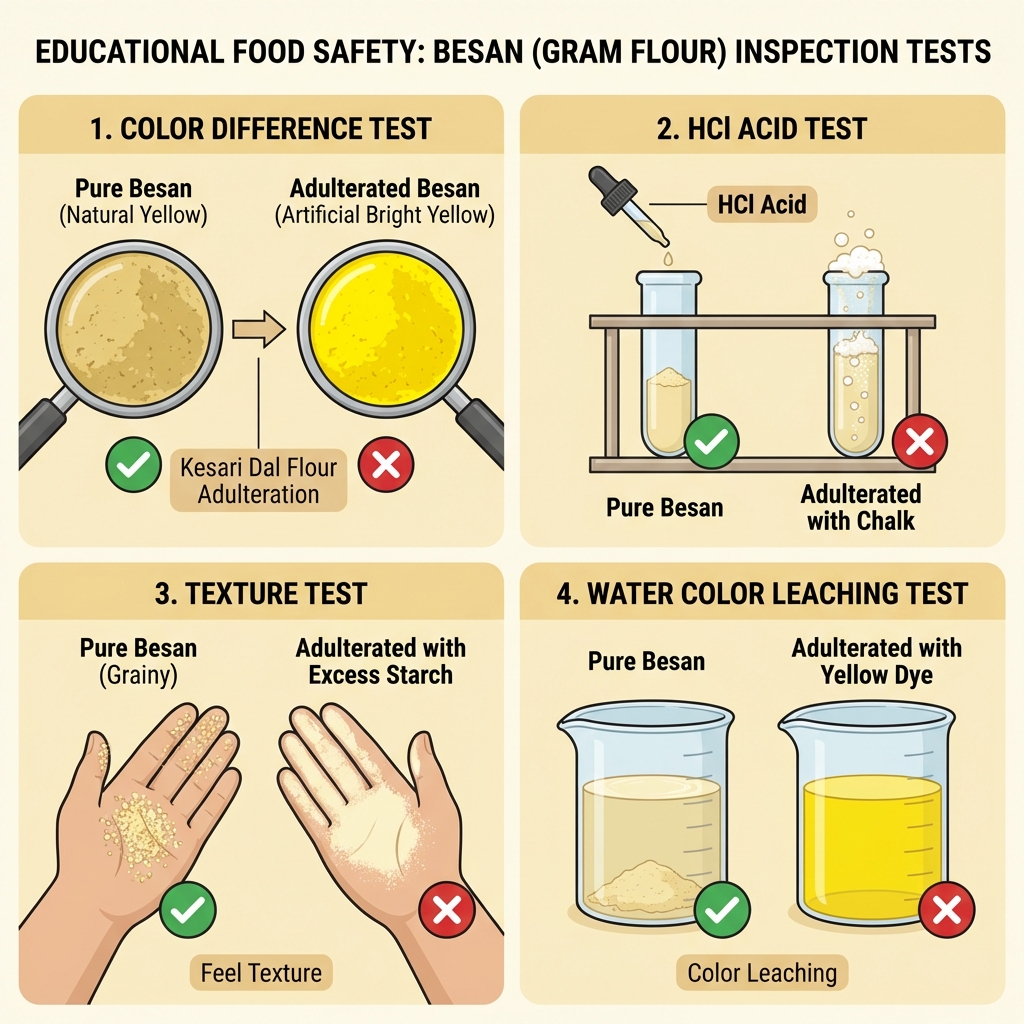
Besan is adulterated with Kesari dal flour (toxic, causes lathyrism/paralysis), yellow dye, and chalk powder to reduce cost and enhance appearance.
1. The Color Test:
Pure besan has a natural pale yellow to slightly greenish-yellow color with a dull, matte appearance. Adulterated besan is unnaturally bright yellow (due to textile dye like Metanil Yellow) or too white (chalk addition). The color should be subtle, not vibrant.
2. The HCl Test (Advanced, for Chalk Detection):
Add a few drops of diluted hydrochloric acid (HCl) to a small sample of besan. If you see fizzing, bubbling, or effervescence, it indicates chalk powder presence (calcium carbonate reacts with acid). Pure besan won't fizz. Note: This requires caution with acid handling.
3. The Water Color Leaching Test:
Mix a tablespoon of besan in a glass of water and let it settle for 15 minutes. If the water turns bright yellow or contains yellow color that has leached out, it indicates artificial yellow dye. Pure besan water will be cloudy white to pale yellow but not bright.
4. The Texture Test:
Rub besan between your fingers. Pure besan feels slightly grainy with a natural texture because it's ground from chickpeas. Adulterated besan with excess starch or refined flour feels too smooth, almost silky or powdery. Natural besan has slight grittiness.
5. The Taste Test:
Taste a tiny pinch of raw besan. Pure besan has a characteristic nutty, slightly bitter, earthy taste (from chickpeas). Adulterated besan with Kesari dal or other adulterants tastes bland, flat, or has an unusual taste. The chickpea flavor should be prominent.
Quick Safety Tips
- Check for natural pale yellow color (not bright yellow)
- Avoid unnaturally bright yellow besan - likely has toxic dye
- Texture should be slightly grainy, not silky smooth
- Buy from certified sources to avoid Kesari dal mixing
Chemical Concerns
Step 1: AI Visual Scan
New to BioLens? Try a sample test