
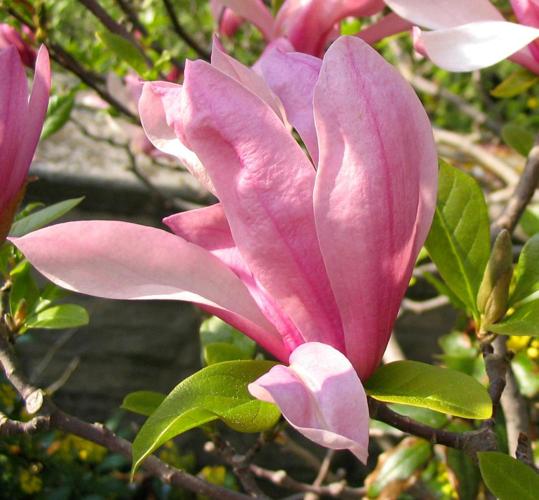
Magnolia
Magnolia
Basic Details
Floral Formula & Features
Ebracteate (no bracts), radially symmetrical (actinomorphic), bisexual, 9-18 tepals in 3-6 whorls of 3 (perianth not differentiated into sepals and petals), numerous free stamens arranged spirally, numerous free carpels arranged spirally on elongated receptacle (apocarpous), each with superior ovary. Primitive flower structure
- Named by Carl Linnaeus for French botanist Pierre Magnol. Among Earth's most ancient flowering plants - fossils date back 95 million years. Evolved before bees, so pollinated by beetles. Over 200 species. Flowers have tepals (petals and sepals look alike) instead of distinct petals. Considered primitive flowering plant showing evolutionary link
- Flowers 3-12 inches (7-30 cm) across depending on species. Shapes include goblet (M. grandiflora), tulip (M. soulangeana), or star (M. stellata). Colors range from pure white to pink, purple-pink, yellow, or bicolors. Typically 6-12 tepals (petal-like structures). Sweet, lemony, or citrus fragrance. Blooms early spring (March-May) before or with leaves
- Evergreen or deciduous trees or large shrubs. Southern types (M. grandiflora) evergreen with glossy, leathery leaves. Asian species deciduous, flowering on bare branches in spring. After flowering, produces cone-like aggregate fruit containing red seeds. Slow-growing but long-lived. Pyramidal to spreading form
- Size varies by species: shrub forms 10-15 feet (3-4.5 m), medium trees 20-40 feet (6-12 m), large specimens 60-80 feet (18-24 m). Spread 20-40 feet. Lifespan of 80-120+ years, some specimens over 200 years. Propagated from seed, cuttings, layering, or grafting. Slow-growing, adding 1-2 feet per year
- Native to two main regions: eastern North America (M. grandiflora, M. virginiana) and eastern Asia (China, Japan, Korea, Himalayas). Found in moist woodlands, stream banks, and mountain slopes. Now cultivated worldwide in temperate and subtropical zones. Many garden hybrids developed
- Requires full sun to partial shade (6+ hours sun for best flowering). Prefers moist, well-drained, slightly acidic soil rich in organic matter. Needs consistent moisture, especially when young. Protect from strong winds. Hardy zones 4-10 depending on species. Shallow roots - mulch well, avoid cultivation beneath tree
- Magnificent specimen tree for lawns, estates, and large gardens. Flowers attract beetles (primitive pollinators). Evergreen types provide year-round screening. Fragrant flowers used in perfumes. Bark and flower buds used in traditional Chinese medicine. Flowers edible, used in Asian cuisine. Symbolizes nobility, perseverance, and dignity. State flower of Mississippi and Louisiana
Names in Different Languages
What is Floral Formula?
A floral formula is a symbolic representation of a flower's structure using letters, numbers, and special symbols. It provides a concise way to describe the arrangement and number of floral parts.
This formula describes the flower's symmetry, sepals, petals, stamens, and carpels in a standardized format.
Formula Sequence
- Bract: Br or Ebr
- Bracteole: Brl or Ebrl
- Symmetry: % (Radial) or ⊕ (Bilateral)
- Sex: ♀ (Female), ♂ (Male), or ⚥ (Bisexual)
- Calyx/Sepal: K<number> (Free or Fused)
- Corolla/Petal: C<number> (Free or Fused)
- Androecium: A<number> (Free or Fused)
- Gynaecium: G<number> (Superior or Inferior Ovary)
Symbol Meanings
- Numbers: Indicate quantity of parts
- Parentheses (): Parts are fused together
- Plus (+): Parts in different whorls
- Underline: Superior ovary position
- Overline: Inferior ovary position
- ∞: Numerous parts (too many to count)
Understanding floral formulas helps botanists quickly identify and classify flowers based on their structural characteristics.
Similar Flowers
Discover flowers that share botanical characteristics
Similar Characteristics
4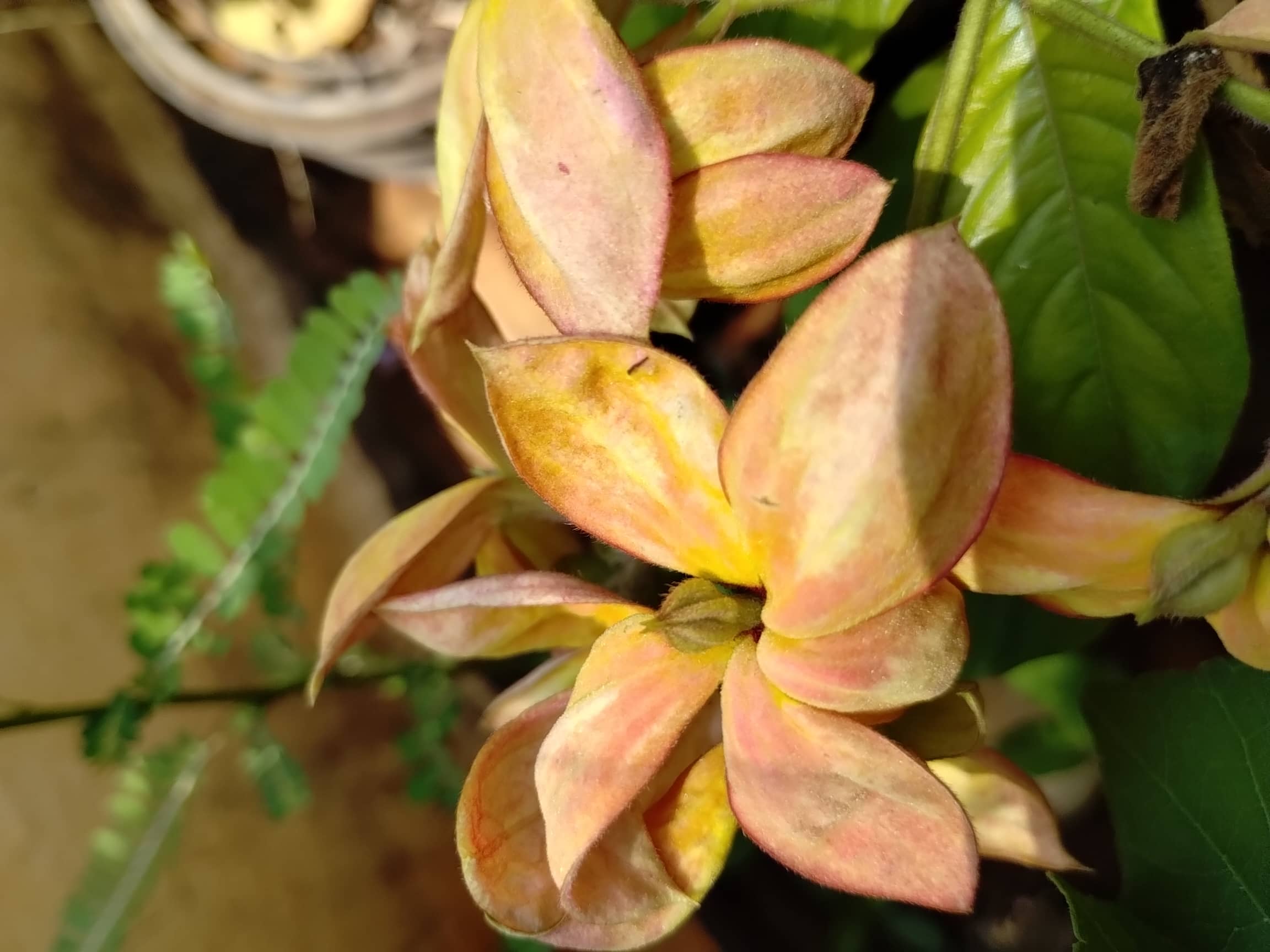
Mussaenda
Mussaenda erythrophylla
Tropical shrub famous for large, colorful leaf-like bracts in red, pink, white, ...
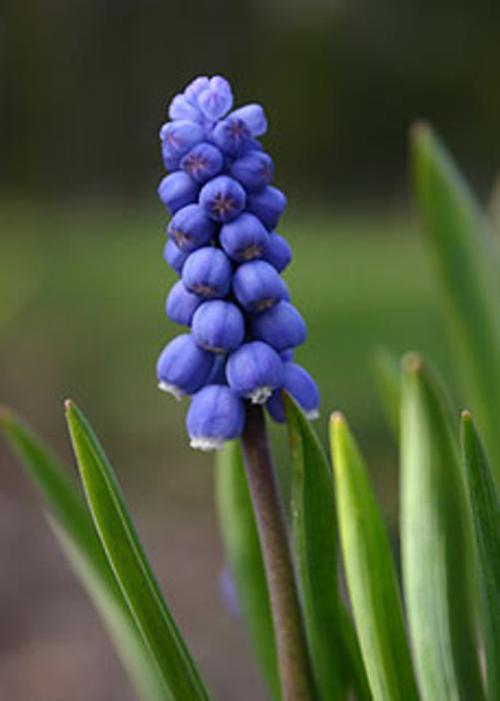
Grape hyacinth
Muscari
Charming spring bulb featuring dense spikes of tiny, urn-shaped flowers in rich ...
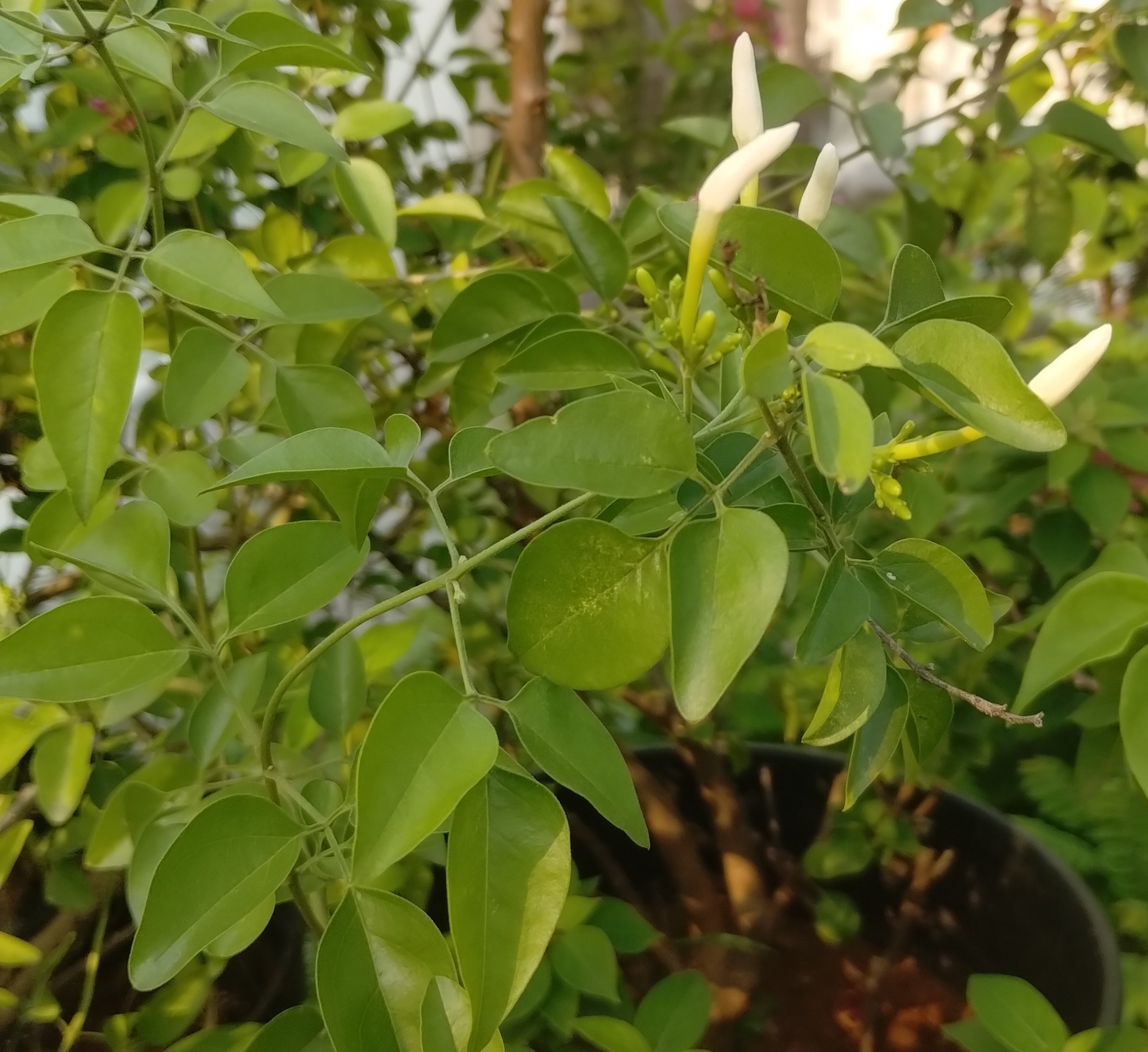
River Jasmine (Fluminense)
Jasminum fluminense
Vigorous evergreen climbing vine producing clusters of small, white, star-shaped...
Primrose (Cowslip)
Primula veris
Cheerful spring wildflower with clusters of nodding yellow flowers on tall stems...