
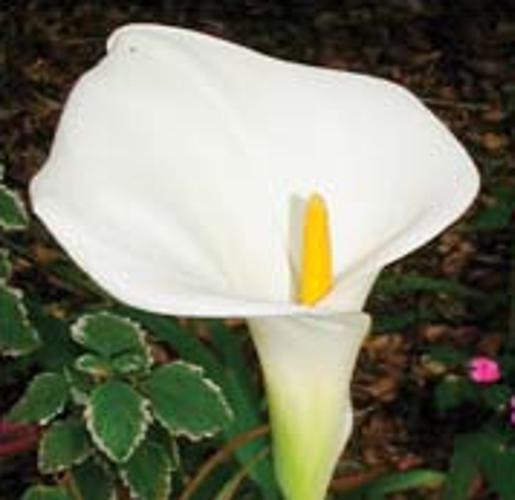
Arum Lily
Zantedeschia aethiopica
Basic Details
Floral Formula & Features
Bract (spathe) present, bisexual, perianth of 6 tepals in 2 whorls of 3 (though often reduced or absent in individual flowers), 6 stamens in 2 whorls of 3, 3 carpels with superior ovary. This describes individual tiny flowers on spadix
- Name 'Calla' comes from Greek 'kallos' meaning beauty. 'Arum Lily' refers to resemblance to Arum genus, though it's not a true lily (Liliaceae family). Zantedeschia honors Italian botanist Giovanni Zantedeschi
- Showy spathe wraps around a central spadix bearing the true flowers - tiny and inconspicuous. White arum lily (Z. aethiopica) has pure white spathe; colored callas (Z. elliottiana, Z. rehmannii) bloom in rainbow hues. Spathes last 2-3 weeks on plant, 7-10 days as cut flowers
- Rhizomatous perennial that grows from thick, fleshy underground stems. White arum lily is semi-aquatic and evergreen in mild climates; colored callas are deciduous with summer dormancy. Blooms spring through summer depending on species
- Height ranges from 1-3 feet (30-90 cm) depending on variety. Dwarf varieties stay under 18 inches. Lifespan of 5-10 years with proper care. Propagated by division of rhizomes or from seed
- Native to southern Africa, particularly South Africa's marshlands and stream banks. White arum lily grows naturally in wet areas; colored callas prefer drier conditions. Now cultivated worldwide
- White arum lily thrives in full sun to partial shade and consistently moist to boggy soil, even growing in shallow water. Colored callas prefer well-drained soil and drier conditions. Both tolerate shade better than most flowering plants
- All parts contain calcium oxalate crystals, toxic if ingested causing severe mouth and throat irritation. Popular cut flower for weddings, funerals, and formal arrangements. Symbolizes purity, rebirth, and resurrection in various cultures
Names in Different Languages
What is Floral Formula?
A floral formula is a symbolic representation of a flower's structure using letters, numbers, and special symbols. It provides a concise way to describe the arrangement and number of floral parts.
This formula describes the flower's symmetry, sepals, petals, stamens, and carpels in a standardized format.
Formula Sequence
- Bract: Br or Ebr
- Bracteole: Brl or Ebrl
- Symmetry: % (Radial) or ⊕ (Bilateral)
- Sex: ♀ (Female), ♂ (Male), or ⚥ (Bisexual)
- Calyx/Sepal: K<number> (Free or Fused)
- Corolla/Petal: C<number> (Free or Fused)
- Androecium: A<number> (Free or Fused)
- Gynaecium: G<number> (Superior or Inferior Ovary)
Symbol Meanings
- Numbers: Indicate quantity of parts
- Parentheses (): Parts are fused together
- Plus (+): Parts in different whorls
- Underline: Superior ovary position
- Overline: Inferior ovary position
- ∞: Numerous parts (too many to count)
Understanding floral formulas helps botanists quickly identify and classify flowers based on their structural characteristics.
Similar Flowers
Discover flowers that share botanical characteristics
Similar Characteristics
4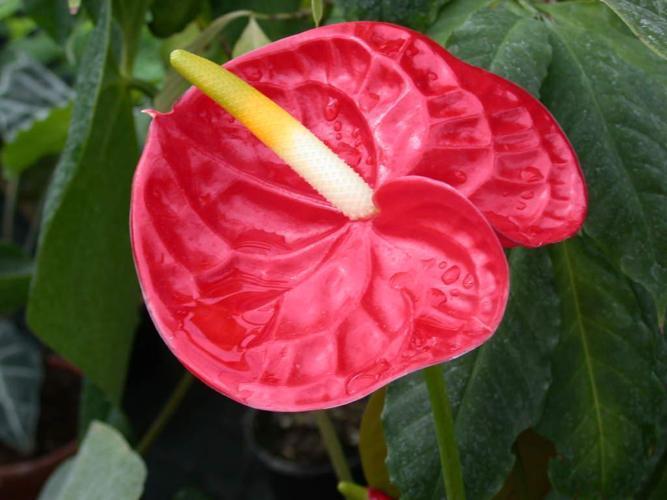
Anthurium
Anthurium andraeanum
Exotic tropical plant featuring a distinctive heart-shaped, glossy spathe (modif...
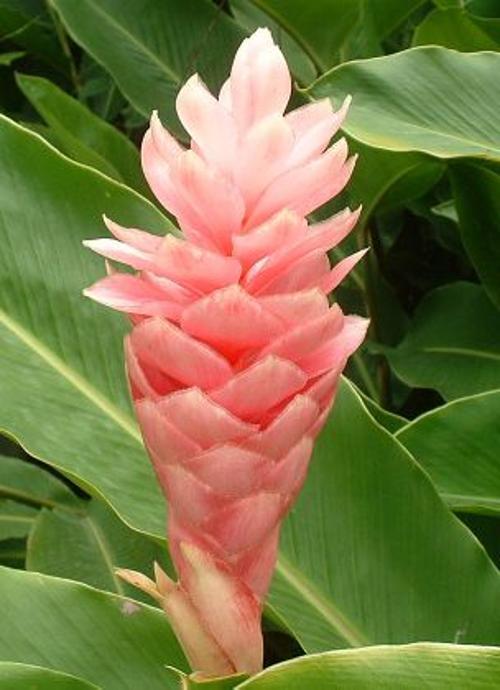
Red Ginger (Ostrich Plume)
Alpinia purpurata
Stunning tropical plant with brilliant red or pink cone-shaped flower spikes res...
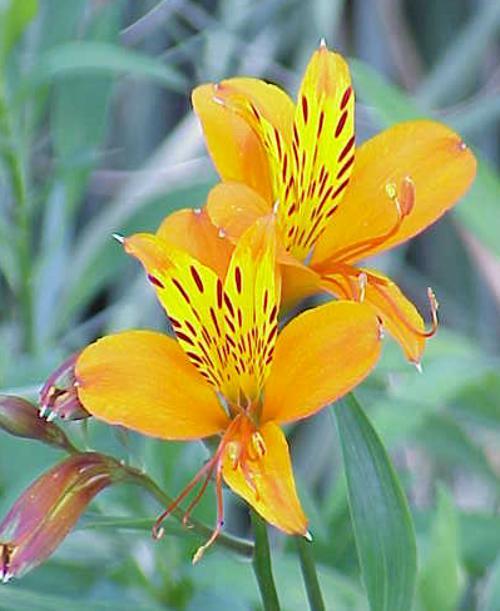
Peruvian Lily
Alstroemeria
Showy lily-like flowers with six petals covered in distinctive speckles, stripes...
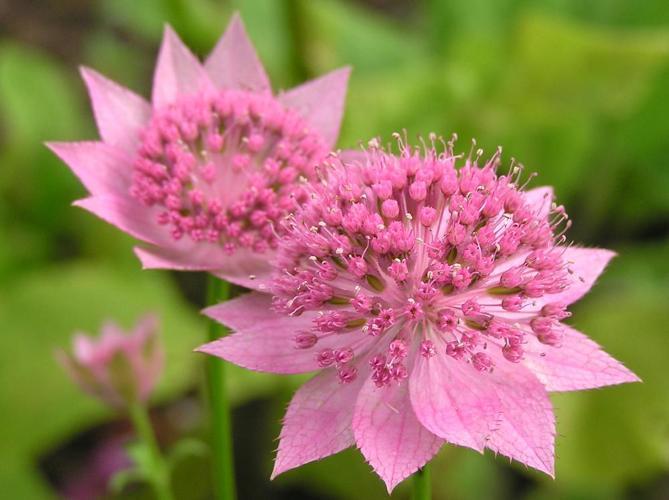
Masterwort
Astrantia
Distinctive perennial with star-shaped flower heads composed of tiny florets sur...