
Rajma (Kidney Beans) Safety Inspection
Detect artificial coloring and dyes in kidney beans (Rajma)
Inspection Guide
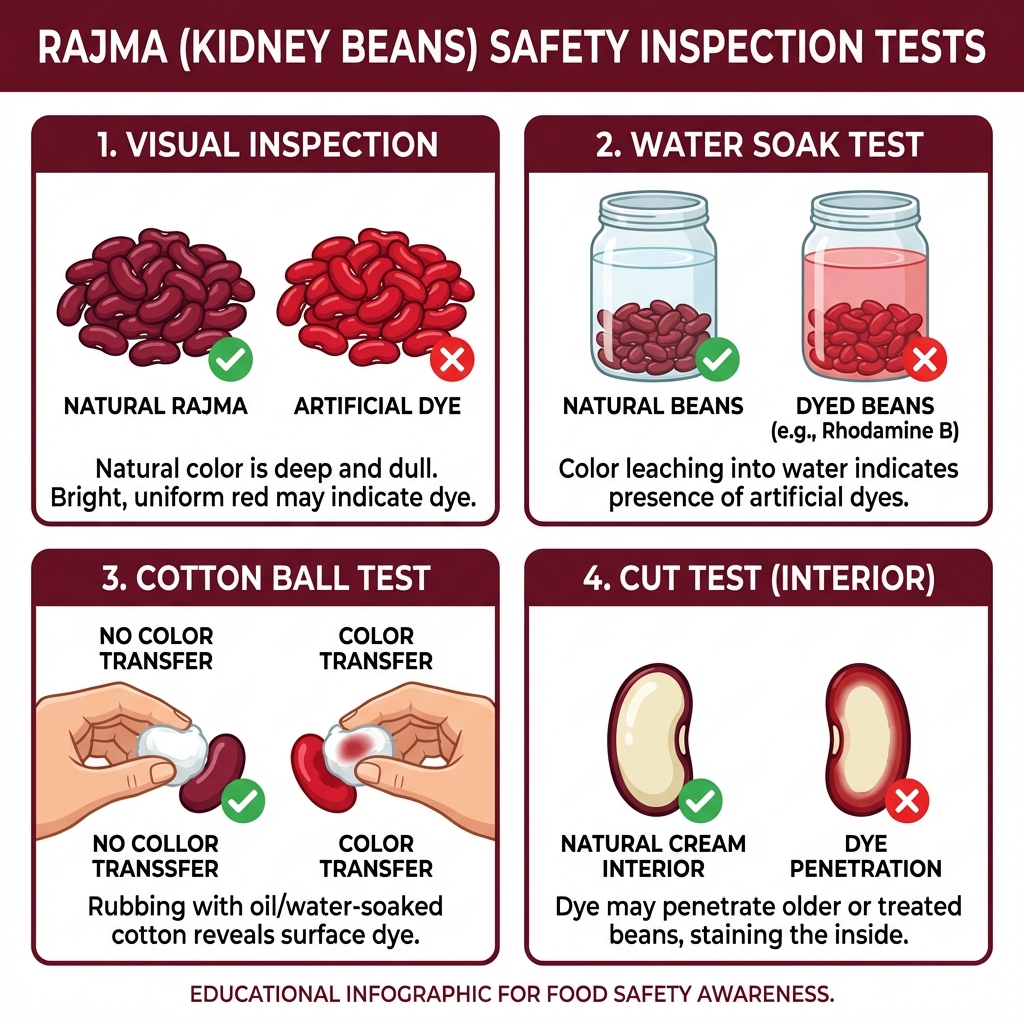
Click to enlarge
Rajma (Kidney Beans) Purity Check
Rajma is often treated with red dyes to make old/faded beans look like premium "Chitra" or "Kashmiri" varieties.
1. The Water Soak Test:
Soak rajma in water for 30 minutes. Natural beans release very minimal color (light brownish tint is okay). If the water turns bright red or pink, it indicates toxic dyes like Rhodamine B.
2. The Cotton Ball Test:
Rub the bean surface with a cotton ball soaked in vegetable oil or water. If red color transfers to the cotton, it's artificially dyed. Pure beans won't leave color stains.
3. The Interior Check (Cut Test):
Cut a bean. Natural rajma should be creamy/white inside. If the red color has penetrated deep into the bean or the inside is also reddish, it indicates dye penetration from heavy treatment.
4. Surface Color Uniformity:
Natural rajma has varied tones; some are darker, some lighter (especially Kashmiri or Chitra varieties). Uniformly bright red/maroon beans that look "too perfect" are suspicious.
Quick Safety Tips
- Soak test for color leaching - red/pink water is bad
- Cotton test for surface dye detection
- Check for natural color variations (varied tones)
- Wash thoroughly and discard any beans that bleed color instantly
Chemical Concerns
Step 1: AI Visual Scan
New to BioLens? Try a sample test