
Masoor Dal (Red Lentils) Safety Inspection
Detect artificial red dyes in red lentils (Masoor Dal)
Inspection Guide
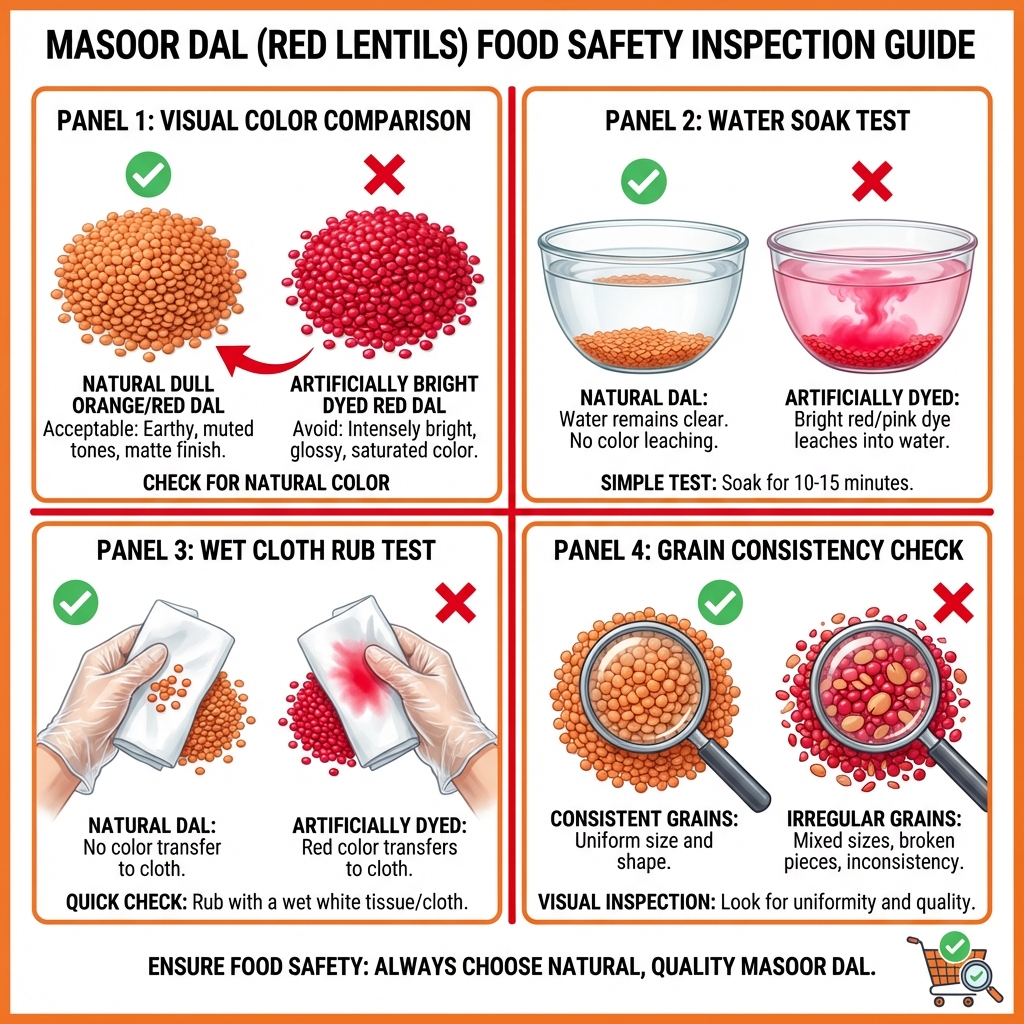
Click to enlarge
Masoor Dal (Red Lentils) Adulteration Test
Masoor Dal is often polished and dyed with synthetic red/pink colors (like Rhodamine B) to look more attractive.
1. The Cold Water Test:
Take a handful of dal in a glass of cold water and leave it for 10-15 minutes. Pure Masoor dal will not color the water significantly. If the water turns bright red, pink, or orange, it's a clear sign of artificial dyeing.
2. The Wet Cloth Rub Test:
Rub some dal grains with a wet white cloth. If red/pink color transfers to the cloth, it indicates surface dye treatment.
3. Visual Grain Inspection:
Natural Masoor dal has a dull, earthy orange color with slight variations. If all grains are perfectly uniform, glossy, and intensely bright red, they are likely dyed.
4. The Texture Test:
Natural red lentils have a matte finish. If they feel oily or unnaturally smooth, they may have been treated with oil or wax coating to enhance appearance.
Quick Safety Tips
- Water test - color leaching means artificial dye
- Natural dal is dull orange, not intensely bright red
- Rub test for color transfer
- Always wash multiple times before cooking
Chemical Concerns
Step 1: AI Visual Scan
New to BioLens? Try a sample test