
Chickpeas (Kabuli Chana) Safety Inspection
Detect chalk powder coating and stones in chickpeas
Inspection Guide
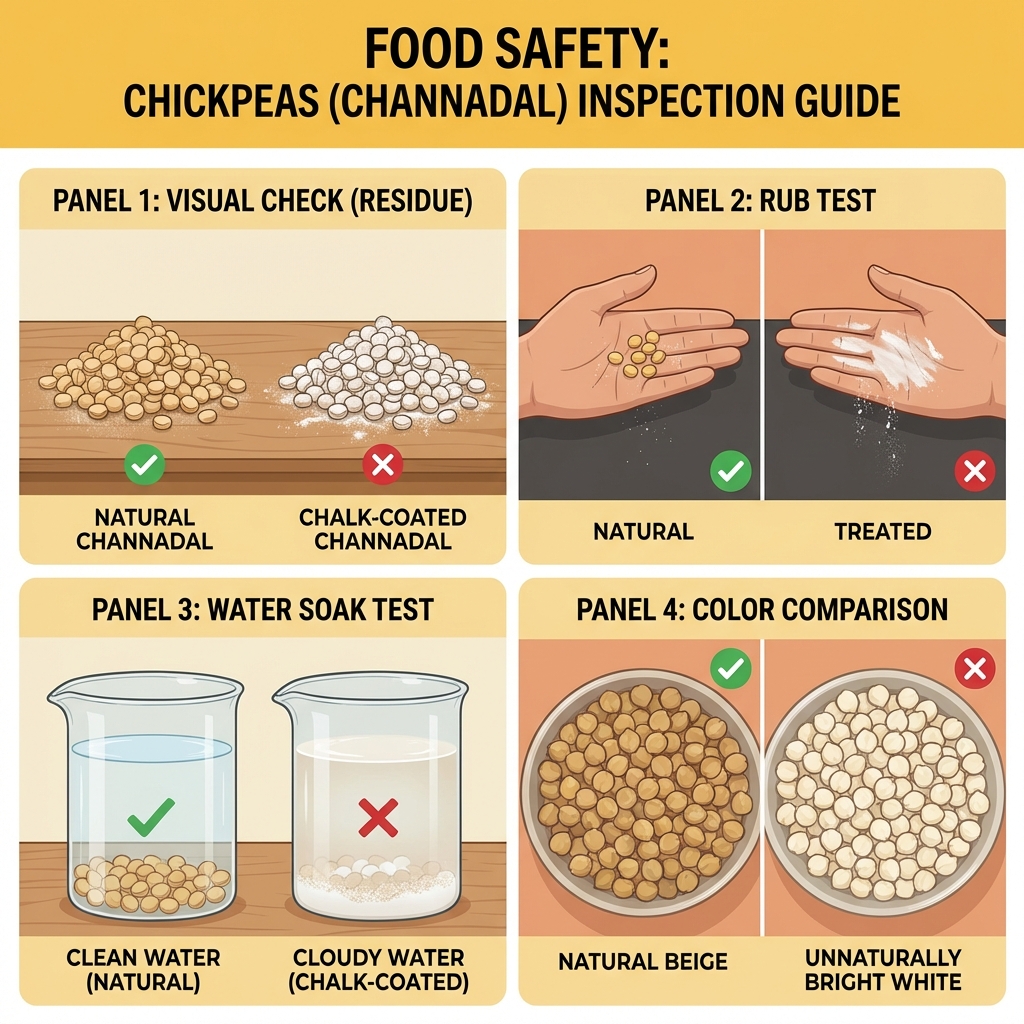
Click to enlarge
Chickpeas Chalk Powder Detection
Chickpeas (Kabuli Chana) are coated with chalk powder to make them appear whiter, larger, and hide discoloration or blemishes.
1. The Rub Test (Primary Indicator):
Take a few chickpeas in your hand and rub them together vigorously, or rub them with your dry fingers. If excess white powder comes off and coats your hand, it's chalk powder. Natural chickpeas have minimal dust. The powder will leave a white chalky residue on your palms.
2. The Water Soak Test:
Soak chickpeas in a bowl of clear water for 30 minutes. If the water turns milky white or you see white sediment settling at the bottom of the bowl, it indicates chalk powder coating. Natural chickpeas will release minimal color and the water stays relatively clear.
3. The Color Check:
Examine the chickpeas carefully. Natural chickpeas are beige to cream-colored with natural variations - some darker spots, some lighter areas. Chalk-coated chickpeas are abnormally bright white or have uniform color that looks "too perfect."
4. The Visual Stone Inspection:
Spread chickpeas on a flat surface and look for small stones, pebbles, or debris mixed in. These are added to increase weight. Natural chickpeas should be free from foreign objects.
5. The Wash and Feel Test:
Wash the chickpeas under running water and feel them. If they feel slippery or chalky during washing, or if significant white residue washes off, it confirms chalk coating. After washing, they should feel clean and smooth.
Quick Safety Tips
- Rub test - excess white powder indicates chalk coating
- Soak in water and check for milky water or sediment
- Natural chickpeas are beige/cream, not bright white
- Always wash thoroughly and remove any stones before cooking
Chemical Concerns
Step 1: AI Visual Scan
New to BioLens? Try a sample test