Balloon
Platycodon grandiflorus
Basic Details
Description
Floral Formula
Features
Translations
Related
Basic Details
NameBalloon
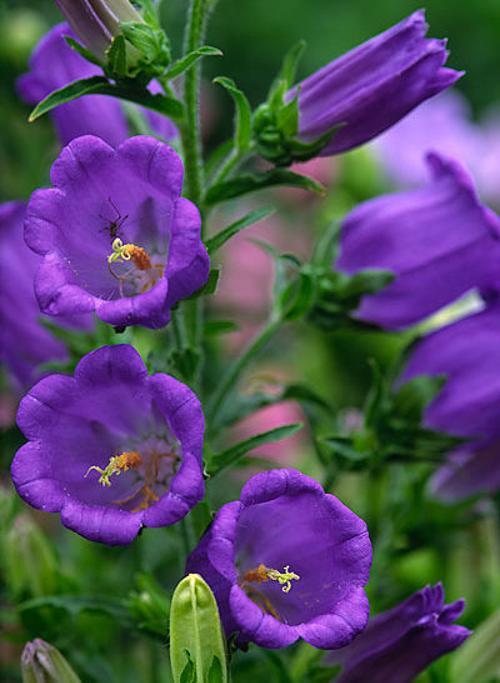
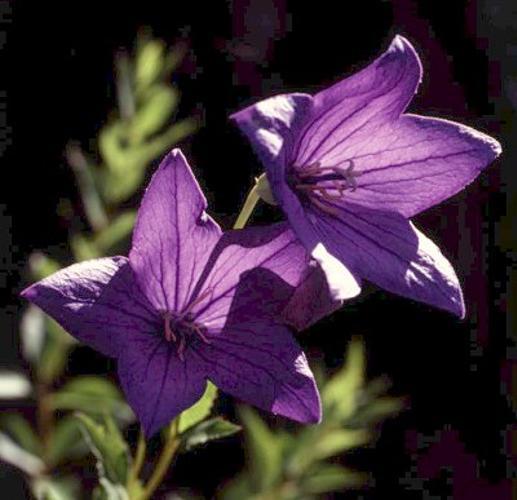
DescriptionThis flower gets the name from its flower buds which swells up like a balloon before it opens up. The flowers themselves are in the shape of a bell and hence known as 'Chinese bellflower'. It is also known as Platycodon
FamilyCampanulaceae
GenusPlatycodon
TribePlatycodoneae
Floral Formula & Features
Floral Formula⊕ ⚥ K(5) C(5) A5 G(5)
Radially symmetrical, bisexual, 5 fused sepals, 5 fused petals, 5 free stamens, 5 fused carpels with inferior ovary
Features
- Its unique flower buds, which swell up and resemble small balloons before they open
- Flowers are mostly blue in color. White, Purple and Pink colors are also found
- It is a perennial herbaceous plant
- It Grows upto 1 to 4 feet with lifespan of 3 to 5 years
- Native of East Asia and found extensively in China, Japan, Korean and East Russia
- The roots of the plant are used in traditional medicine for respiratory ailments
- Need direct sunlight for blooming but Frost and Drought tolerant and can survive in tough conditions well.
Names in Different Languages
Latin / ScientificPlatycodon grandiflorus
English (Alternate)Balloon Flower, Chinese Balloon Flower, Chinese Bellflower, and Japanese Bellflower
Hindiगुब्बारे वाला फूल (gubbāre vālā phūl)
TamilMudakathan (முடக்கற்றான்)
Teluguబెలూన్ పువ్వు (bēluṁ puvvū)
Malayalamബലൂൺ പൂവ് (baloon poo), കൈലാസ് (kailas), ആലില പൂവ് (aalila poo)
Kannadaಸರಸರಿ (sarasari)
Sanskritविद्युत-पुष्प (vidyut-pushpa)
Bengaliকুকুরন (kukuron)
Frenchfleur de ballon
Russianпузырник крупноцветковый (pyzyrnik krupnocvetkovyy)
Spanishflor de globo
GermanBallonglocke
What is Floral Formula?
A floral formula is a symbolic representation of a flower's structure using letters, numbers, and special symbols. It provides a concise way to describe the arrangement and number of floral parts.
Example Formula
% K(6) C1+2+(2) A(9) G2
This formula describes the flower's symmetry, sepals, petals, stamens, and carpels in a standardized format.
Formula Sequence
- Bract: Br or Ebr
- Bracteole: Brl or Ebrl
- Symmetry: % (Radial) or ⊕ (Bilateral)
- Sex: ♀ (Female), ♂ (Male), or ⚥ (Bisexual)
- Calyx/Sepal: K<number> (Free or Fused)
- Corolla/Petal: C<number> (Free or Fused)
- Androecium: A<number> (Free or Fused)
- Gynaecium: G<number> (Superior or Inferior Ovary)
Symbol Meanings
- Numbers: Indicate quantity of parts
- Parentheses (): Parts are fused together
- Plus (+): Parts in different whorls
- Underline: Superior ovary position
- Overline: Inferior ovary position
- ∞: Numerous parts (too many to count)
Understanding floral formulas helps botanists quickly identify and classify flowers based on their structural characteristics.
Similar Flowers
Discover flowers that share botanical characteristics