Toor Dal (Pigeon Peas) Safety Inspection
Detect Metanil Yellow dye and Kesari dal adulteration in Toor Dal
Inspection Guide
Click to enlarge
Toor Dal Adulteration Detection
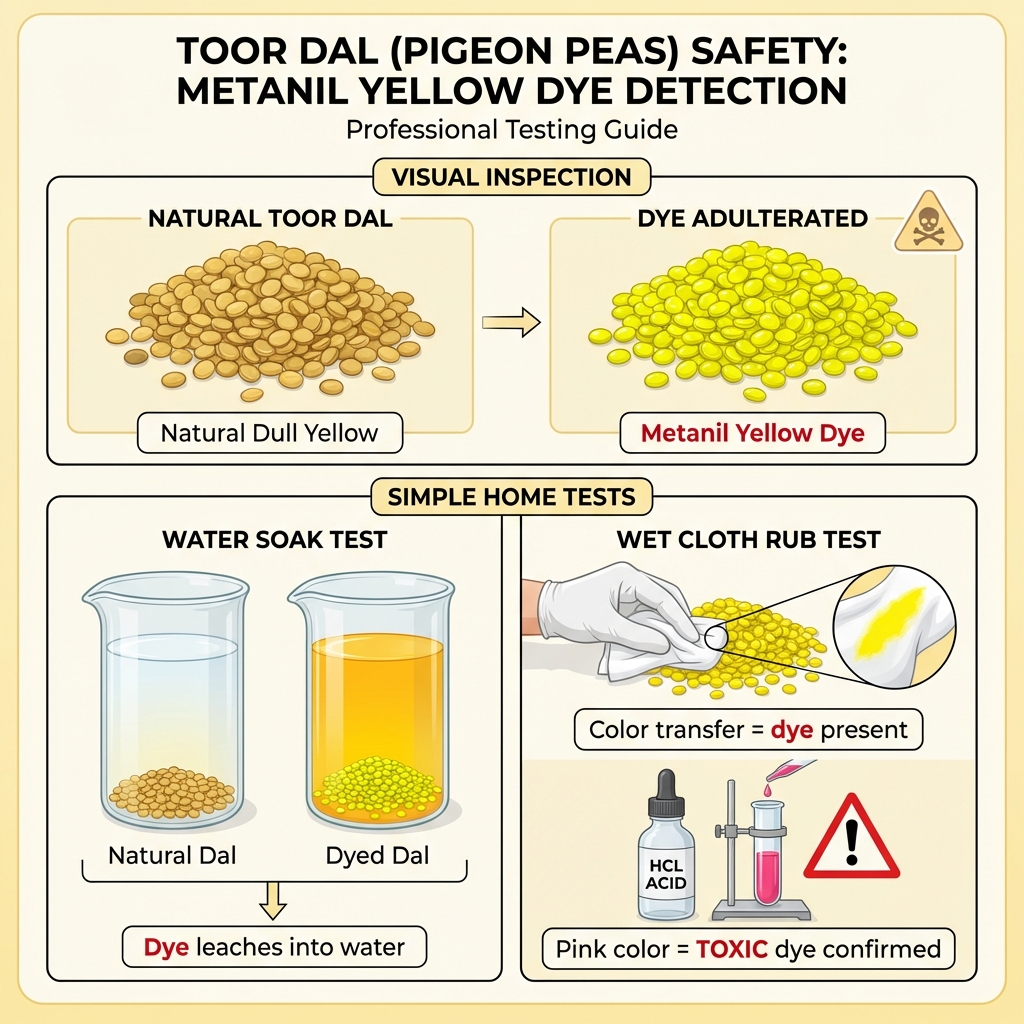
Toor Dal (Pigeon Peas) is commonly adulterated with Metanil Yellow, a toxic textile dye, and Kesari dal which causes lathyrism (a paralysis condition).
1. The Color Test:
Natural Toor Dal has a dull, natural yellow color with slight variations. If the dal is unnaturally bright yellow, almost fluorescent, or has a uniform intense yellow color, it likely contains Metanil Yellow dye.
2. The Water Soak Test:
Take a handful of dal and soak in water for 30 minutes. Natural Toor Dal will release minimal color. If the water turns bright yellow or orange, it indicates artificial dye presence.
3. The Wet Cloth Rub Test:
Take a few dal grains and rub them vigorously with a wet white cloth. If yellow color transfers to the cloth, it's a clear sign of Metanil Yellow dye. Natural dal won't leave significant color stains.
4. The Hydrochloric Acid Test (Advanced):
Add 5ml of diluted HCl to dal soaking water. If the water turns pink or red, it confirms Metanil Yellow presence. This test requires caution with acid handling.
5. Visual Shape Inspection:
Kesari dal (which causes paralysis) looks very similar to Toor dal but is slightly flatter and more angular. Natural Toor dal grains are more rounded and consistent in shape.
Quick Safety Tips
- Check for unnaturally bright yellow color
- Perform water soak test - dye leaches into water
- Wet cloth rub test for color transfer
- Always buy from certified sources to avoid Kesari dal mixing
Chemical Concerns
Step 1: AI Visual Scan
New to BioLens? Try a sample test